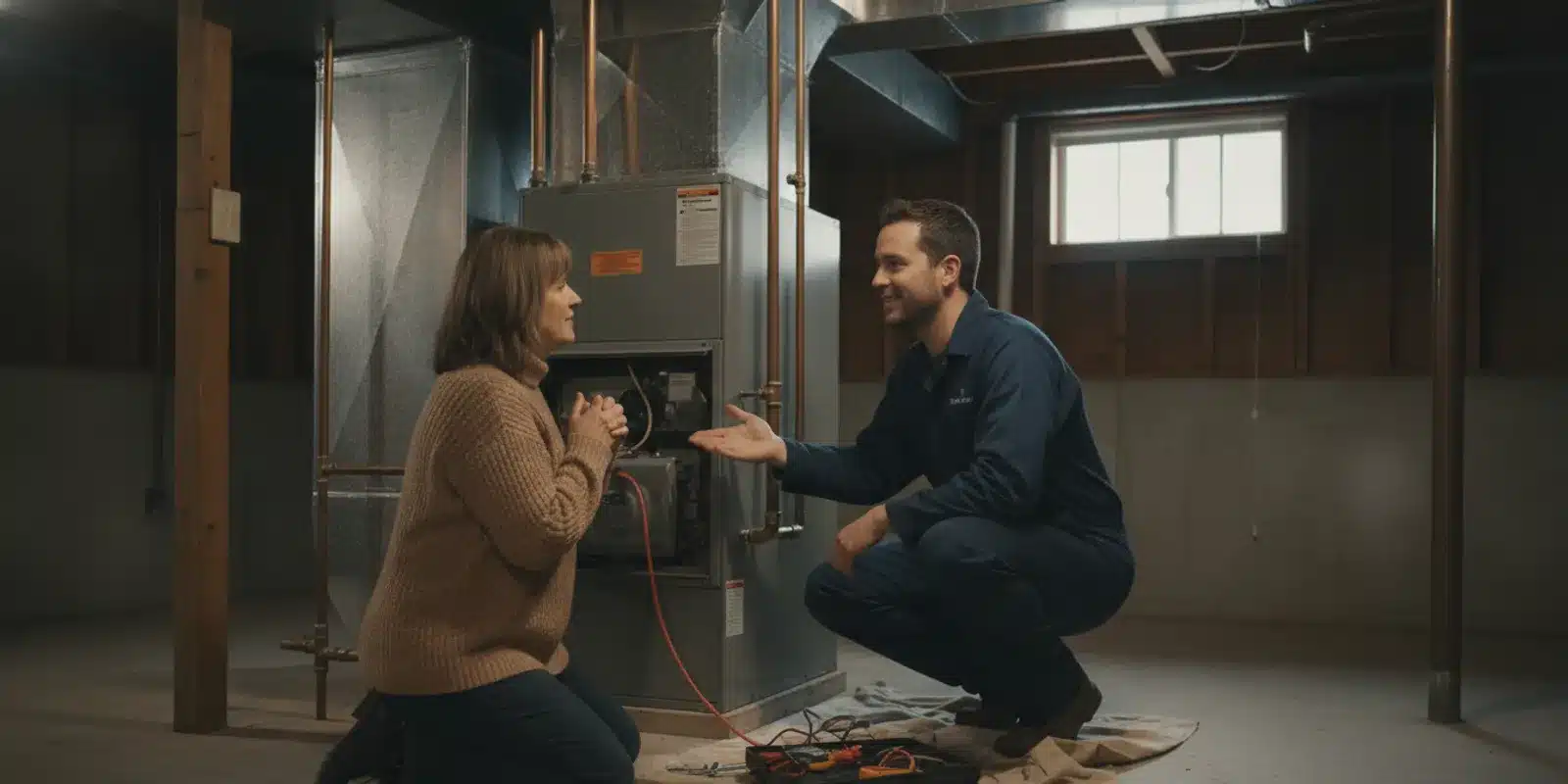
A rattling noise in your basement on a freezing Indianapolis night is a warning you cannot ignore. Your home should be a safe haven, not an icy box that leaves you shivering. When old heaters start to fail, finding the right replacement is your best path forward.
The average furnace replacement cost Indianapolis families pay ranges from $3,000 to $7,000, with most setups landing around $4,626 for a standard home. This price range usually covers the new heating unit, expert installation labor, and any needed permits. Your final price depends on the size of your house, how hard the job is, and the efficiency rating of the new system. Although a high-efficiency unit costs more upfront, it will lower your monthly gas bills. Based on local cost data from Angi, the total price for a new system can range from $2,818 to $6,462 depending on these factors. Choosing the right system keeps you warm and protects your budget for years to come.
Most homeowners want to know the price of a new system before they make a choice. To help you plan, we look at the main factors in How Much Does Furnace Replacement Cost in Indianapolis? The path begins with a clear look at local price ranges.
Furnace Replacement Cost Indianapolis: How Much Does Furnace Replacement Cost in Indianapolis?
Replacing a furnace is a major home project. For most homes, the average furnace replacement cost in Indianapolis ranges from $3,000 to $7,000. According to data from Angi, the average price for this service in the local area is $4,626. But your final cost can run from $2,818 to $6,462 depending on what your home needs.
Understanding Pricing by System Type
Your costs depend on the fuel efficiency of the unit you buy. AFUE measures how well a system turns fuel into heat. According to Energy.gov, a higher rating means less fuel escapes as waste. When you are choosing between heat pumps and furnaces, price is a big factor.
A standard furnace has an 80% rating. High-efficiency models can reach 98% or more. These units cost more upfront but save you money on monthly gas bills.
| Furnace Type | AFUE Rating | Average Cost Range | Key Benefit |
|---|---|---|---|
| Single-Stage Gas Furnace | 80% AFUE | $3,500 – $5,500 | Lowest upfront price |
| Two-Stage Gas Furnace | 92% – 95% AFUE | $5,000 – $7,500 | Good balance of price and savings |
| Variable-Speed Condensing Furnace | 96% – 98% AFUE | $7,500 – $11,000+ | Maximum monthly bill savings |
Add-On Expenses to Consider
A new furnace setup often needs more than just the heating unit itself. Older homes in Central Indiana may need changes to meet local safety codes. Depending on your home’s setup, you may need to pay for extra parts or system upgrades to support a modern unit.
- Venting changes: Upgrading to a high-efficiency system requires new PVC pipes, which cost $300 to $1,200.
- Gas line upgrades: If your gas pipe is too small, a line upgrade will cost $250 to $900.
- Condensate pump: High-efficiency units make water and need a pump costing $150 to $450 to drain it.
- Smart thermostats: Adding a smart control system to run your heating costs $200 to $500.
- Duct modifications: Adjusting your ductwork to fit the new system costs $400 to $2,000.
- Air quality add-ons: Installing a whole-home humidifier costs $500 to $1,200, while a media air cleaner costs $400 to $1,000.
Labor and Service Call Fees
Labor is another key part of furnace replacement cost in Indianapolis. Labor rates depend on how hard the job is. Some local companies charge high fees just to come to your home to look at your system. At Armor Air, we believe in honest work and clear prices. That is why we offer no trip charge ever. This policy saves you money on day one and makes it easier to plan your budget.
Choosing the right heating system for your home can be hard. A proper load calculation is needed to find the right furnace size. Our expert team will help you find a furnace that fits both your heating needs and your budget.
Getting a new furnace is a big step, but keeping it running well is just as key. Regular care helps your new heating system last much longer. You can extend furnace lifespan with maintenance each year. Simple steps like replacing your air filters can also prevent sudden breakdowns in the middle of winter.
Furnace Replacement Cost by Efficiency Level: 80% vs 92% vs 96% AFUE
When you check the furnace replacement cost indianapolis dealers quote, efficiency is the main factor. Heating units use a system called AFUE to show how they turn fuel into heat. High-efficiency units cost more upfront but use less gas. This means you will spend less on your energy bills each month.
What is an AFUE rating?
AFUE stands for Annual Fuel Utilization Efficiency. It is a simple percentage that shows fuel-to-heat conversion. For example, a system with a 90% AFUE means that 90% of the energy in the fuel becomes heat for your home. The other 10% escapes up the chimney or through venting.
Choosing the right rating helps you get the best comfort during cold winters. You can read more about understanding AFUE ratings to see how this works. Choosing a higher rating can keep your home warm for less.
Ductwork quality also affects how much heat you get. According to a study on furnaces and boilers by Energy.gov, duct system leaks can lose up to 35% of a furnace’s energy output. This loss is common when ducts run through unconditioned areas like attics or crawl spaces. Sealing your ducts helps your new heating unit work at its best.
Standard efficiency vs high-efficiency tiers
Most gas furnaces fit into three main tiers. Standard models have an 80% AFUE rating and cost the least upfront. Mid-tier high-efficiency units have a 92% to 95% AFUE rating. A top-tier system has a 96% to 98% AFUE rating.
These top models convert almost all their fuel into warmth. This is helpful if you are also choosing between heat pumps and furnaces for your home heating needs. Modern systems work better to help reduce your energy use.
Higher AFUE ratings mean higher upfront furnace costs. Standard 80% systems are simpler to set up. But high-efficiency models need special PVC pipes for venting and a drain line for water. These extra tasks can add to your setup costs.
| Efficiency Tier | AFUE Rating | Average Cost Range | Venting Needed | Monthly Gas Bills |
|---|---|---|---|---|
| Standard Efficiency | 80% AFUE | $3,500 – $5,500 | Standard metal chimney | Highest monthly bills |
| Mid-Efficiency | 92% – 95% AFUE | $5,000 – $7,500 | PVC pipe venting | Moderate monthly bills |
| High-Efficiency | 96% – 98% AFUE | $7,500 – $11,000+ | Direct vent PVC pipes | Lowest monthly bills |
Finding the right fit for your home
Your budget and goals will help you decide which furnace is best. An 80% furnace is a good choice if you plan to move soon. It keeps your upfront costs low. But if you plan to stay in your home for many years, a 96% furnace is often the best choice.
The monthly savings on your gas bill will slowly pay back the higher upfront price. Choosing high-efficiency units helps you save on heating bills over time. Our team can help you check your home and find the perfect heating system match.
8 Signs It’s Time to Replace Your Furnace
Common signs of heating system failure
Many homeowners worry about the furnace replacement cost indianapolis HVAC companies quote. Knowing the warning signs of a dying furnace can help you plan ahead. A standard furnace is built to keep your home warm and safe during cold winter months. But like any appliance, your heating system will wear out over time. Before booking a fix, you can read an expert Indianapolis HVAC repair guide to see if a simple fix is possible. If your system is too old or damaged, buying a new unit is often the safest and most budget-friendly choice.
Safety and performance concerns to watch for
-
Your furnace is more than 15 years old. Most residential furnaces have a lifespan of 15 to 20 years. According to Energy.gov, older units run at much lower efficiency. Replacing an aging system with a modern furnace is an easy way to reduce energy use.
-
Rising energy bills. If your monthly gas or electric costs keep climbing but your habits have not changed, your furnace is losing its efficiency. Old systems must work much harder to produce the same amount of heat, which drives up your monthly bills.
-
Frequent and costly repairs. You should consider a furnace replacement when the cost of a single repair exceeds 50% of the price of a brand-new unit. Spending money on constant fixes for a dying system is not a smart use of your budget.
-
Uneven heating and cold air. If some rooms in your home feel like an icebox while others are warm, your heating system is failing to distribute air properly. A furnace that blows cold air can stem from a bad igniter or a clogged filter. If you need to troubleshoot furnace problems, cold air is a clear sign that you need a professional.
-
Strange or loud noises. Healthy furnaces should run quietly in the background. If you hear loud banging, rattling, or squealing noises, your system has a mechanical issue. These strange sounds often mean parts are loose or broken, and ignoring them can lead to total system failure.
-
A yellow pilot light. A safe gas burner flame should always be steady and blue. A yellow or flickering pilot light is a warning sign of poor combustion. This can create a dangerous carbon monoxide leak. It is vital to check your pilot light and know what to do when a furnace stops igniting safely.
-
Visible rust or cracks on the unit. Over time, the heat from your furnace can cause the metal on the heat exchanger to crack. Rust, soot, or cracks are serious safety hazards that allow toxic gases to escape into your home. If you notice any rust or cracks on your system, you must shut it off and call for help right away.
To keep your system running well and postpone a replacement, regular maintenance is key. Clean filters and annual tune-ups help keep your system safe and efficient. Keeping a close eye on these warning signs will help you know when it is time to call for professional help.
What the Furnace Replacement Process Looks Like
Replacing a home heating system takes careful work. Knowing what to expect helps you plan for the installation. Our team provides expert furnace installation services in Indianapolis to keep your home safe and warm. Licensed and insured technicians handle each step to make the process simple. This ensures your heating system runs well for many years.
System Sizing and Preparation
First, a technician must visit your home to check its heating needs. We perform a load calculation to find the exact size of furnace you need. Sizing the unit right prevents issues like short cycling. We also help you select the right model and fuel type. Choosing a high-efficiency system is a great way to save on monthly bills, as noted by the U.S. Department of Energy. A system that is too small or too large will waste fuel and wear out fast.
Next, we handle the paperwork. This includes getting a local permit, which is about $150 for homes under 2,500 square feet. We then clear the workspace around your old heating unit. This keeps the job site safe for everyone. We also lay down drop cloths to protect your floors and carpet from dirt.
Removing and Installing the Unit
Once we prepare the area, the real work begins. High-efficiency systems often require direct vent or sealed combustion paths to manage gases safely. The cost to install these units may be higher because they need new PVC lines for venting. When planning for this work, you should consider the furnace replacement cost Indianapolis people pay. Our team makes sure everything meets local building codes.
- System sizing and model choice. We perform a load calculation to find the right furnace size. Then, we help you select an efficiency level and model that fits your heating needs.
- Permits and area setup. We obtain all local permits, which cost $150 for homes under 2,500 square feet. Next, we prepare the area around your unit and protect your floors.
- Old unit removal. Our team shuts off the gas and electrical lines to safely remove the old furnace. We carefully pack and haul away the old unit to scrap it.
- New system installation. We set the new unit in place and connect it to your ductwork. If you buy a high-efficiency system, we set up new PVC pipes for the intake and exhaust.
- Utility connections. The technicians wire the power and run the gas lines. All connections are sealed and tested to prevent leaks.
- Testing and final checks. We run the furnace through a full heating cycle to test its performance. Then, we do a final safety check to ensure everything works perfectly.
Higher Efficiency Means Lower Bills: Understanding AFUE Ratings
Looking at your total furnace replacement cost in Indianapolis is just the first step. You also need to think about how much the system costs to run each month. Your unit’s efficiency rating shapes your energy bills for years.
What Is an AFUE Rating?
AFUE stands for Annual Fuel Utilization Efficiency. It measures how well a system converts fuel into heat. The U.S. Department of Energy notes that a 90% AFUE rating means 90% of the fuel becomes home heat. The other 10% escapes up the chimney or flue.
Many older homes in Indianapolis have furnaces with low ratings, sometimes as low as 60% AFUE. That means nearly half of the gas you buy goes to waste. An upgrade to a high-efficiency system will boost your comfort all winter.
High-efficiency models often cost more to buy. But they offer big monthly savings on your bills. Over time, those fuel savings can help pay back the higher upfront price.
Energy Loss Beyond the Furnace
A high-efficiency unit is a great start. But you can still lose heat if your home has drafty ducts. U.S. energy experts report that ductwork heat losses can account for up to 35% of a furnace’s output. This waste occurs when ducts run through cold areas like attics or crawl spaces.
Even the best furnace cannot warm your home if the heat leaks out before it reaches your rooms. Warm air must travel through a complex web of metal tubes. If these tubes have cracks or gaps, you are paying to heat spaces that do not need it.
This heat loss wastes fuel and raises your gas bills. You can lower these winter heating costs by making sure your ductwork is well sealed and insulated.
Simple Ways to Boost Your Savings
You can also use smart tools to lower your gas bills. A smart thermostat controls your heating schedule. This easy upgrade can reduce your heating costs by 10% to 15% by dropping the heat when you are away.
These tools learn your daily routine and adjust the heat when you sleep or leave for work. You do not have to worry about turning down the dial by hand. Over time, these small shifts add up to big savings on your gas bills.
Keeping your system in top shape is just as important. Regular furnace maintenance services help prevent sudden breakdowns. This yearly care ensures your system runs at peak efficiency.
To make upkeep simple, Armor Air offers a Shield Protection Plan. For just $14.99 per month, this plan includes yearly tune-ups to help extend furnace lifespan with maintenance.
Why Proper Furnace Sizing Matters
When planning for a new heating system, you should look beyond the upfront furnace installation services and the basic furnace replacement cost Indianapolis dealers quote. A furnace that is too big or too small will cause major issues for your family. Getting the sizing right is the best way to keep your home cozy and your heating bills low during the cold Indiana winters.
The Risk of an Oversized Furnace
Many homeowners believe that a bigger furnace is always a better choice. But according to the U.S. Department of Energy, a heating system must be sized right to run at peak efficiency. If a unit is too large, it will heat your home fast and then shut down. This quick turning on and off is known as short-cycling.
This rapid cycling puts extra stress on main parts, which causes them to wear out much faster. It also prevents the furnace from warming your rooms in an even way. To protect your system and avoid these furnace short cycling problems, make sure your unit is the right size from the start.
How a Load Calculation Works
An expert HVAC tech should always perform a precise load calculation before you buy a new unit. This calculation finds the exact heat your home needs by looking at your home size, wall insulation, and window types. For example, a standard 1,900 square foot Indianapolis home needs between 57,000 and 114,000 BTUs of heating power. A load calculation helps you find a model that fits this range well.
Zoning Systems for Extra Efficiency
You can also use a zoning system to make your new furnace even more efficient. Zoning setups divide your living spaces into distinct heating areas, each with its own thermostat. This lets you heat only the rooms you are using, which prevents energy waste and lowers your power bills. Zoning helps keep your house warm while shielding your heating system from extra wear over time.
How Indianapolis Homeowners Afford a New Furnace
Buying a new furnace is a major choice for your home. The upfront furnace installation services cost can seem high, but you have options to make it easy. Local plans help keep your home warm without breaking your budget.
Payment plans and financing
Many families use low monthly payments to handle the cost of a new heating system. You can get 0% financing for 12 months through Service Finance or Hearth when you buy a new unit. These payment choices make it simple to plan your budget. You do not have to pay the full price all at once. Also, working with a team that has no trip charge ever can save you $85 to $185 on service calls.
You can also join a plan to protect your new unit. The Shield Protection Plan costs $14.99 per month and includes your annual maintenance. This plan helps your system run well and last longer. It also keeps your system warranty active. If you have an urgent need, same-day service is ready to keep you safe.
Energy savings and home value
A new furnace also brings long-term value to your property. According to Energy.gov, modern systems that save energy help you use less fuel. These units waste less fuel, which helps cut down your monthly energy bills. Over time, these savings help pay back your upfront furnace replacement cost Indianapolis area pricing.
A new furnace can also raise your total home value by about 10%. Buyers like to see a new heating system because they know they will not face repair bills. It is a smart step that makes your home worth more if you choose to sell. A modern system is a great selling point in the local market.
Trusted local service
When you choose a team for this job, trust is everything. Armor Air has worked in Central Indiana for years and has served over 3,000 homes. Our founder and CEO, James Robertson, has worked in HVAC for more than 30 years. We know how to find the right system size for your house.
Homeowners love our work because we focus on doing what is right. We hold a 4.8-star Google rating with over 977 reviews from local customers. You can count on our team to give you honest advice and high-quality work on every visit.
Frequently Asked Questions
What is the average furnace replacement cost in Indianapolis?
The average furnace replacement cost in Indianapolis is between $3,000 and $7,000, as reported by Armor Air. Data from Angi shows a common cost range of $2,818 to $6,462, with a mean price of $4,626. Your final cost depends on the size of your home, the efficiency of the new heating unit, and any needed duct work.
What size furnace do I need for a 2,000 square foot home?
Most homes in Indianapolis need 30 to 50 BTUs of heating power per square foot. For a 2,000 square foot home, this means you need a system that offers 60,000 to 100,000 BTUs. However, you should not guess the size. Technicians from Armor Air must perform a load calculation to find the exact fit. This prevents short cycling and uneven heating.
What is the 5,000 dollar rule for a furnace?
The 5,000 dollar rule is a simple guide used to decide if you should repair or replace your heating system. You multiply the age of your furnace in years by the cost of the needed repair. If the total is more than 5,000, you should replace the unit. Armor Air also recommends replacement when the repair cost is more than 50% of the cost of a new furnace.
Can I finance a furnace replacement in Indianapolis?
Yes, many local HVAC companies offer plans to help you pay for a new heating system. For example, Armor Air offers 0% financing for 12 months on eligible new systems in Central Indiana. These plans let you split the upfront cost of your heating unit into easy monthly payments.
What is a good AFUE rating for a furnace?
AFUE stands for Annual Fuel Utilization Efficiency. It measures how well a furnace turns fuel into heat. According to the U.S. Department of Energy, a high-efficiency system should have a rating of 90% or more. This means 90% of the energy becomes heat for your home, while only 10% escapes up the chimney.
Ready to Schedule Your Indianapolis Furnace Service Today?
A freezing winter night in Indianapolis is the worst time to find out that your old furnace can no longer keep your entire family warm. Putting off a new system means risking a sudden breakdown when you need heat the most, leading to high bills and an unsafe home for everyone. By choosing to upgrade your heating system today, you will get lower energy bills, peace of mind, and a warm, cozy house all season long.
Ready to book? Call (317) 455-4448 to schedule your furnace replacement consultation. Our local experts are ready to help you right away. We offer same-day service and clear pricing with no trip charge ever. Please note we are closed Sundays for God and family.