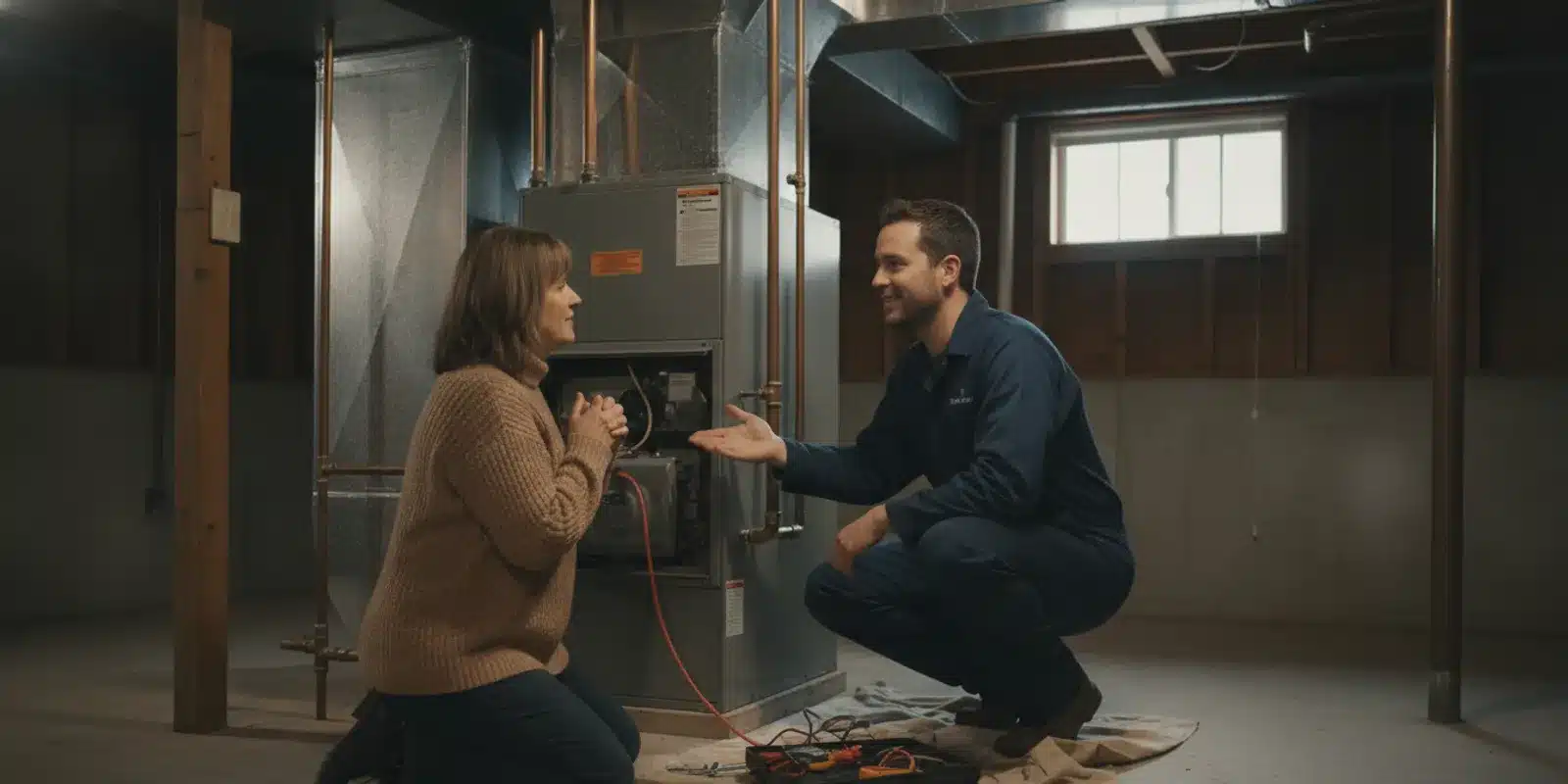
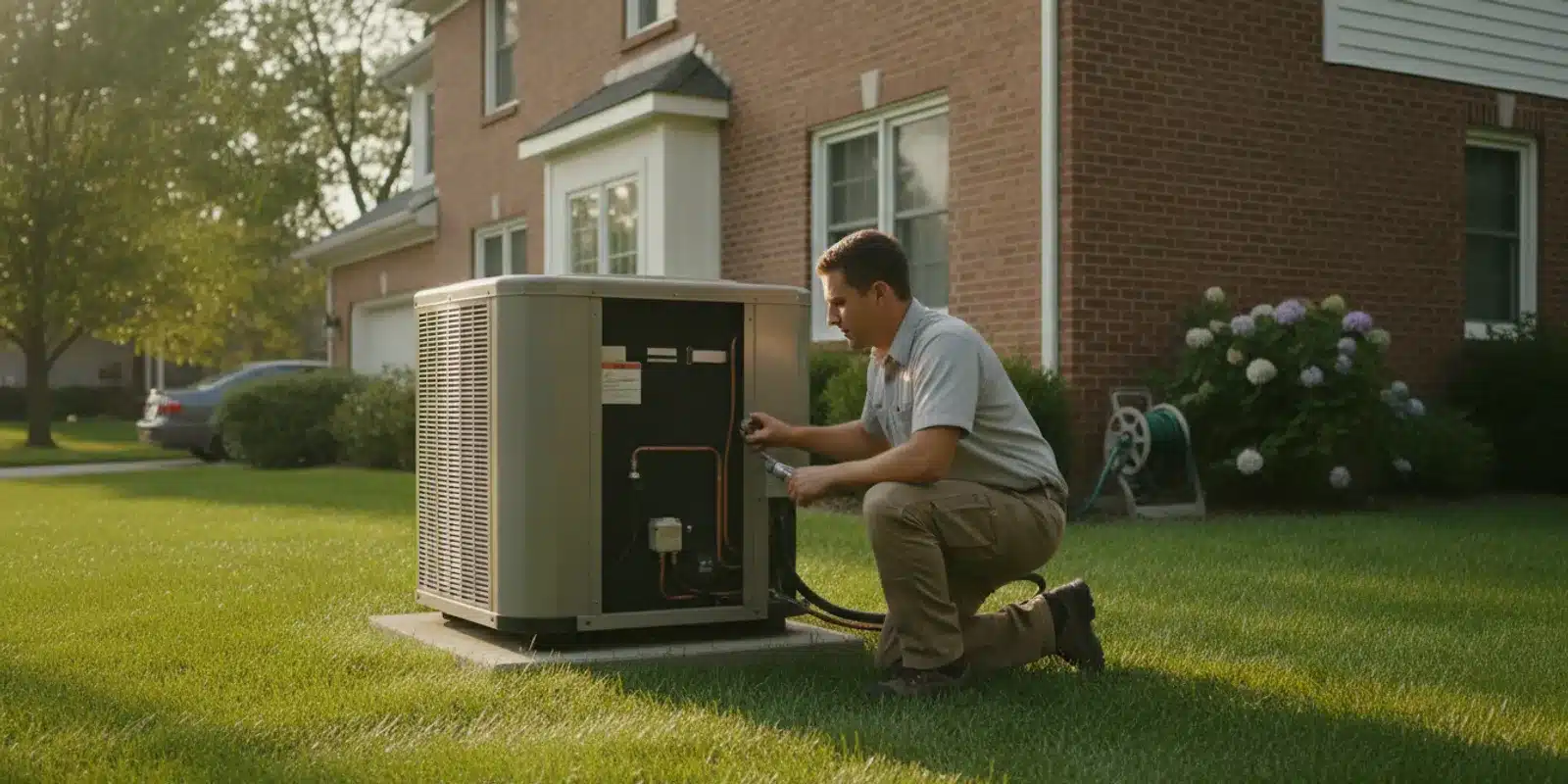
A furnace that kicks on and off every few minutes is not keeping your home warm. This rapid cycle makes your living rooms feel drafty and spikes your monthly energy bills. Many Indianapolis homeowners face this problem when the first cold snap hits each winter.
The term furnace short cycling describes a common issue where your system shuts down before it reaches the heat level on your thermostat. Most healthy home heating systems run for seven to ten minutes at a time. According to Carrier, a dirty air filter or a bad thermostat often causes this problem. This rapid cycle creates extra wear on your motor and causes your energy bills to climb. If you do not fix the issue soon, the constant starting and stopping will lead to expensive repairs.
Call Armor Air for Same-Day Furnace Repair in Indianapolis at (317) 300-5024 or schedule online.
You may wonder why your furnace is doing this and how you can stop it. Finding the root cause is the first step toward a warm home. For a broader look at heating and cooling issues, see our HVAC Repair Indianapolis: Expert Troubleshooting Guide. Read on to understand what furnace short cycling is and what you can do about it.
What Is Furnace Short Cycling?
Furnace short cycling is a common heating problem where your furnace turns on and off too often. Instead of running a full cycle to reach the temperature set on your thermostat, the system shuts down early. This pattern repeats in short bursts throughout the day and night. For homeowners, this means your furnace works much harder while failing to keep your home warm.
Normal Furnace Cycles
A healthy furnace runs for at least 7 to 10 minutes per cycle. The burner fires, the heat exchanger warms up, and the blower pushes warm air through the ducts. On very cold nights, a single-stage furnace may cycle more often because the home loses heat faster. That is normal. Short cycling is different. The furnace fires up, runs for 1 to 2 minutes or less, and shuts off before the house feels warm.
Common Causes of Short Cycling
Several things can cause a furnace to short cycle. The most common causes include a dirty air filter that blocks airflow, a thermostat that is broken or in a bad spot. A faulty limit switch that trips too early, a cracked heat exchanger that triggers safety shutdowns, and an oversized furnace that heats the house too fast.
Why Short Cycling Is Bad for Your Furnace
Short cycling hurts your furnace in three ways. First, it drives up energy bills because the furnace uses the most power during startup. Second, it wears out the blower motor, ignitor, and gas valve faster from repeated start-stop cycles. Third, it can damage the heat exchanger over time from rapid heating and cooling. A faulty thermostat can also cause cycling issues. Check our guide to smart thermostats if yours is outdated or unresponsive.
Oversized Furnace: The Sizing Problem
The biggest single factor in short cycling is a furnace that is too big for your home. A system with more heating power than the house demands creates a constant on and off cycle that never fully satisfies the space.
How an oversized furnace causes short cycling
A furnace that is too large blasts hot air into your home too quickly. The thermostat senses the temperature jump and shuts the system off before a complete heating cycle finishes. This leaves the heat exchanger hot and the blower motor spinning, only to restart minutes later. The result is a rapid on and off pattern that feels like the system cannot catch up.
With a properly sized furnace, the burn cycle lasts long enough to push warm air through every room in the house. An oversized unit never gets that chance. It reaches the thermostat setpoint in just a few minutes, satisfying the sensor but leaving distant rooms cold.
Manual J load calculation is the answer
Professional HVAC contractors use a Manual J load calculation to pick the right furnace size for each home. This standard method measures your home’s square footage, insulation levels, window performance, ductwork layout, and climate zone. It does not guess based on the size of the old furnace.
Armor Air performs Manual J load calculations on every new furnace installation in Indianapolis. A correctly sized furnace runs longer cycles, heats rooms more evenly, and wears out slower than an oversized unit. For more on heating and cooling system options, visit our heating and cooling services page.
Can you fix an oversized furnace?
If your furnace is already installed and too large, replacement is the only full fix. A modulating or variable-speed furnace can reduce short cycling because these units adjust their output to match the home’s heating demand. Two-stage furnaces also run on low fire most of the time, which stretches out the burn cycle. Talk to a licensed HVAC technician about whether a modulating upgrade makes sense for your home.
Dirty Air Filter and Restricted Airflow
A dirty air filter is the most common reason for furnace short cycling. When a filter fills with dust and hair, it blocks the flow of air. Your furnace needs a steady stream of air to move heat away from its core. Without it, the unit can quickly get too hot and shut down to stay safe.
How a clogged filter causes overheating
When the air filter is clogged, the blower fan cannot pull enough air across the heat exchanger. The heat exchanger gets hotter than it should. The limit switch senses the high temperature and tells the gas valve to close. The burner shuts off. A few minutes later, the heat exchanger cools down, and the furnace tries again. The cycle repeats over and over.
Steps to check and replace your air filter
- Find the filter slot on your furnace. It is usually between the return air duct and the blower compartment.
- Pull the old filter out and hold it up to a light. If you cannot see light through it, the filter is clogged.
- Check the size printed on the frame of the old filter.
- Buy a replacement of the same size. Standard 1-inch filters work for most furnaces. You can order replacement air filters from Armor Air.
- Slide the new filter in with the arrow pointing toward the furnace.
- Replace the filter every 1 to 3 months during heating season.
Other airflow restrictions
Closed supply vents, blocked return registers covered by furniture, a dirty blower wheel, and collapsed ductwork can all restrict airflow. Check that every vent in your home is open and that nothing is blocking the return air grilles. These simple checks can stop short cycling without a service call.
Overheating and Limit Switch Issues
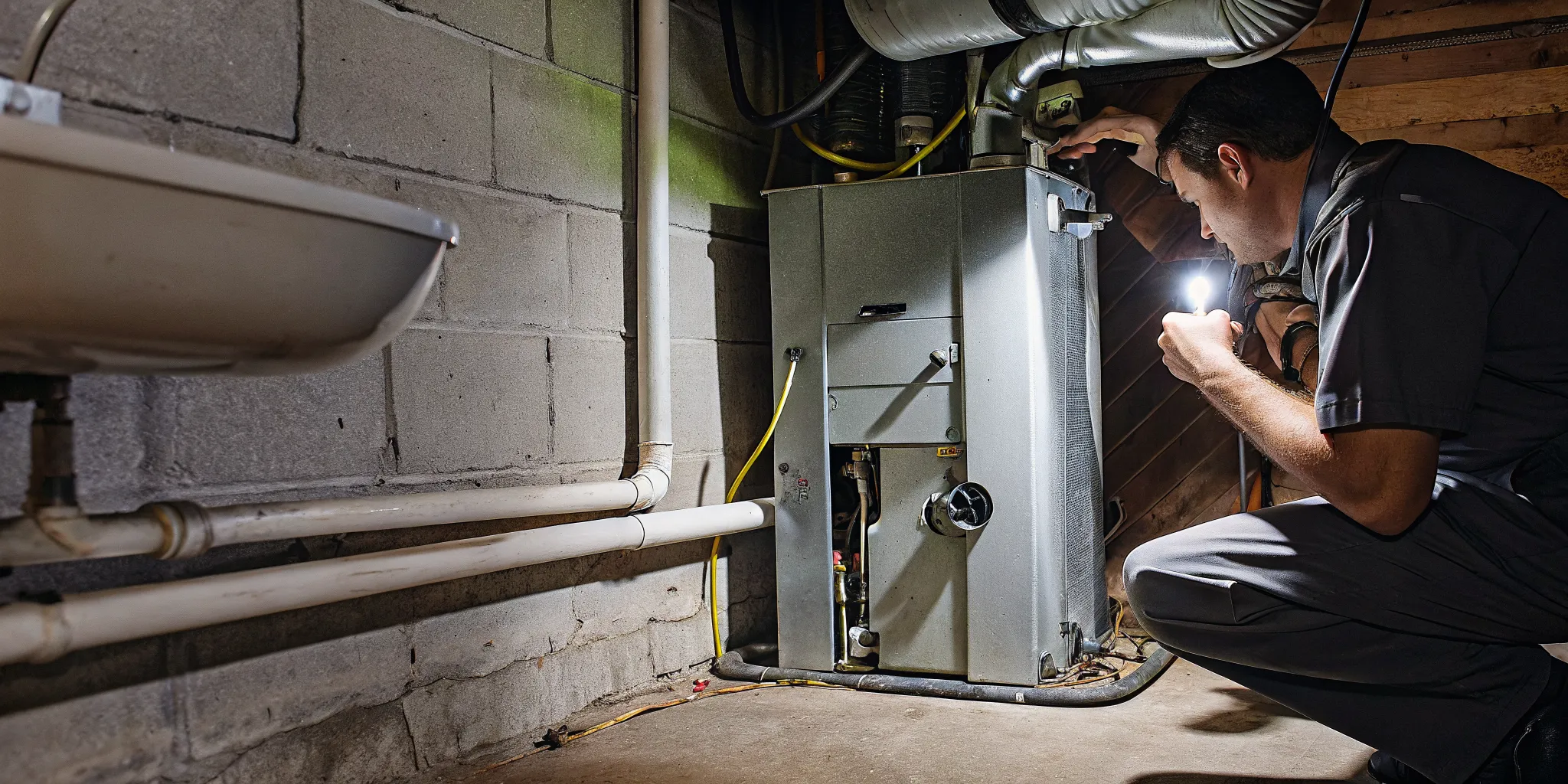
The high-limit switch is a safety device inside your furnace that watches the temperature of the heat exchanger. When the switch detects dangerously high heat, it shuts the burner down to prevent a fire or damage to the system. A faulty limit switch can trip even when the furnace is running at a normal temperature.
How the limit switch works
Your furnace has a metal heat exchanger that gets hot when the burner fires. The blower fan pushes air across this hot surface to warm your home. If airflow is blocked or the filter is dirty, the heat exchanger gets hotter than it should. The limit switch senses this rise and tells the gas valve to close, stopping the flame. This is a safety feature, not a defect.
The problem starts when the switch itself begins to fail. A worn limit switch can trip at normal temperatures. The burner fires, the switch trips, the flame goes out, and the blower runs to cool things down. A few minutes later, the furnace tries again, and the same cycle repeats. Routine HVAC maintenance in Indianapolis catches these problems before they cause a breakdown.
Symptoms of a bad limit switch
Homeowners often notice that the furnace fires up briefly, the blower keeps running after the flame goes out, and the system restarts a short time later. You may also see error codes on the furnace control board or hear a clicking sound as the switch opens and closes. These signs point to a limit switch that needs professional testing.
A licensed technician can test the switch with a multimeter to see if it opens and closes at the right temperature. If the switch is failing, replacement takes a trained pro about an hour. The switch itself costs between $30 and $80, and total repair runs $150 to $400 with labor.
Other overheating causes
A dirty blower wheel, a blocked flue pipe, or a failing inducer motor can also cause overheating. These parts work together to move heat out of the furnace and up the vent. When any one of them fails, the heat stays trapped inside, tripping the limit switch. A full inspection by an HVAC technician is the only way to tell which part is at fault.
How To Diagnose Short Cycling at Home
You can find the cause of furnace short cycling with a few simple checks. Before you call for furnace repair in Indianapolis, walk through these steps to see if the fix is something you can handle on your own. Our complete HVAC troubleshooting guide covers additional diagnostic steps for related issues.
Home check for furnace short cycling
- Change the air filter. This fixes more short cycling problems than any other single step.
- Check the thermostat. Make sure it is not in direct sunlight, near a drafty window, or above a heat source. Replace batteries if needed.
- Open all supply vents and make sure nothing is blocking the return air registers.
- Time the furnace cycle with a stopwatch. A normal cycle runs 3 to 5 minutes or longer. If it runs less than 3 minutes, you likely have short cycling.
- Check the condensate drain line for clogs. A blocked drain can trip a pressure switch and shut the furnace down.
- Listen for unusual sounds. Banging, screeching, or rumbling noises point to a mechanical problem that needs a pro.
When to call a professional
If the steps above do not stop the short cycling, you need a licensed HVAC technician. Call a pro right away if you suspect a cracked heat exchanger. A cracked heat exchanger can leak carbon monoxide into your home. Also call if you hear loud or strange noises, if the furnace produces a burning smell. Or if the system has not been serviced in more than a year. Armor Air offers same-day service with no trip charge. Book an appointment online and a technician will arrive promptly.
What Does Furnace Repair Cost for Short Cycling?
The cost to fix furnace short cycling depends on the cause. Some fixes are cheap and easy to do yourself. Others need a professional and can cost more. The table below shows the most common repairs and typical prices in the Indianapolis area.
| Repair or Service | Cost Range | Notes |
|---|---|---|
| Air filter replacement (DIY) | $15 – $30 | Replace standard 1-inch filters every 1-3 months |
| Thermostat replacement | $150 – $350 | Includes smart thermostat upgrade |
| Limit switch replacement | $150 – $400 | Professional diagnostic included |
| Flame sensor cleaning or replacement | $100 – $300 | Dirty sensor causes burner to fire then shut off |
| Inducer motor repair or replacement | $400 – $800 | Motor maintains proper venting pressure |
| Blower motor repair or replacement | $300 – $800 | Motor pushes air across the heat exchanger |
| Heat exchanger inspection and service | $500 – $2,000+ | Cracked heat exchanger is a safety hazard |
| Full furnace replacement | $4,000 – $10,000 | Includes Manual J sizing, installation, permits |
Save the trip fee with Armor Air
Most HVAC companies in Indianapolis charge $85 to $185 just to walk through the door. Armor Air charges no trip fee ever. A licensed technician comes to your home, inspects the furnace, and gives you a clear price before work starts. You pay nothing if you decide not to move forward.
Armor Air offers 0% financing for 12 months through the GreenSky Loan Program for larger repairs and new furnace installations. Learn more on our financing page. The Shield Protection Plan covers annual tune-ups and priority service for $149 per year, which helps catch airflow and limit switch problems before they cause short cycling.
Frequently Asked Questions About Furnace Short Cycling
How long can a furnace short cycle?
A normal furnace heating cycle lasts at least 7 minutes. Short cycling means the furnace runs for 1 to 2 minutes or less per cycle. The burner fires, runs briefly, and shuts off before the house reaches the set temperature.
Can a dirty air filter cause furnace short cycling?
Yes. A clogged air filter blocks airflow over the heat exchanger. The heat exchanger gets too hot and trips the limit switch, which shuts the burner down. Changing the filter often solves the problem completely.
Is furnace short cycling dangerous?
Short cycling itself is not an immediate safety hazard, but it wastes energy and wears out the furnace faster. A cracked heat exchanger that causes short cycling can leak carbon monoxide, which is dangerous. Call a pro if you suspect a crack.
How do I stop my furnace from short cycling?
Start by changing the air filter and checking the thermostat location. Make sure all vents are open. If the problem continues, a technician needs to test the limit switch, flame sensor, and heat exchanger. Armor Air charges no trip fee for diagnostic visits.
Will an oversized furnace cause short cycling?
Yes. An oversized furnace heats the home too quickly and reaches the setpoint early. It shuts off before a full combustion cycle completes. A Manual J load calculation at installation time prevents this problem.
Get Same-Day Furnace Repair in Indianapolis
Furnace short cycling will not fix itself. Every day you wait puts more strain on your heating system and costs more in wasted energy. Armor Air’s licensed technicians can diagnose the root cause and get your furnace running the way it should.
Every service visit comes with no trip charge ever, same-day scheduling, and transparent pricing before work starts. Call (317) 300-5024 or schedule online today.