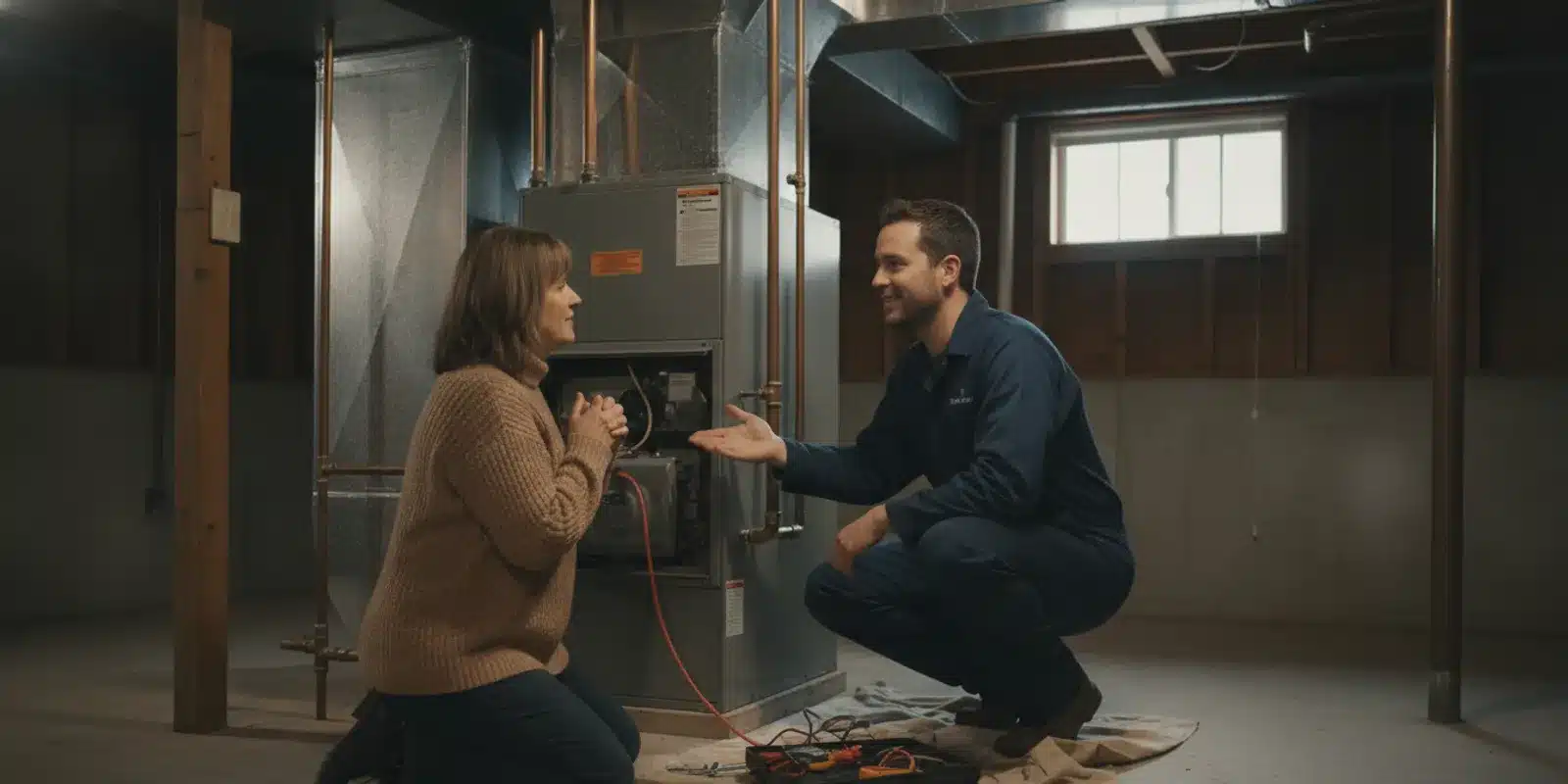
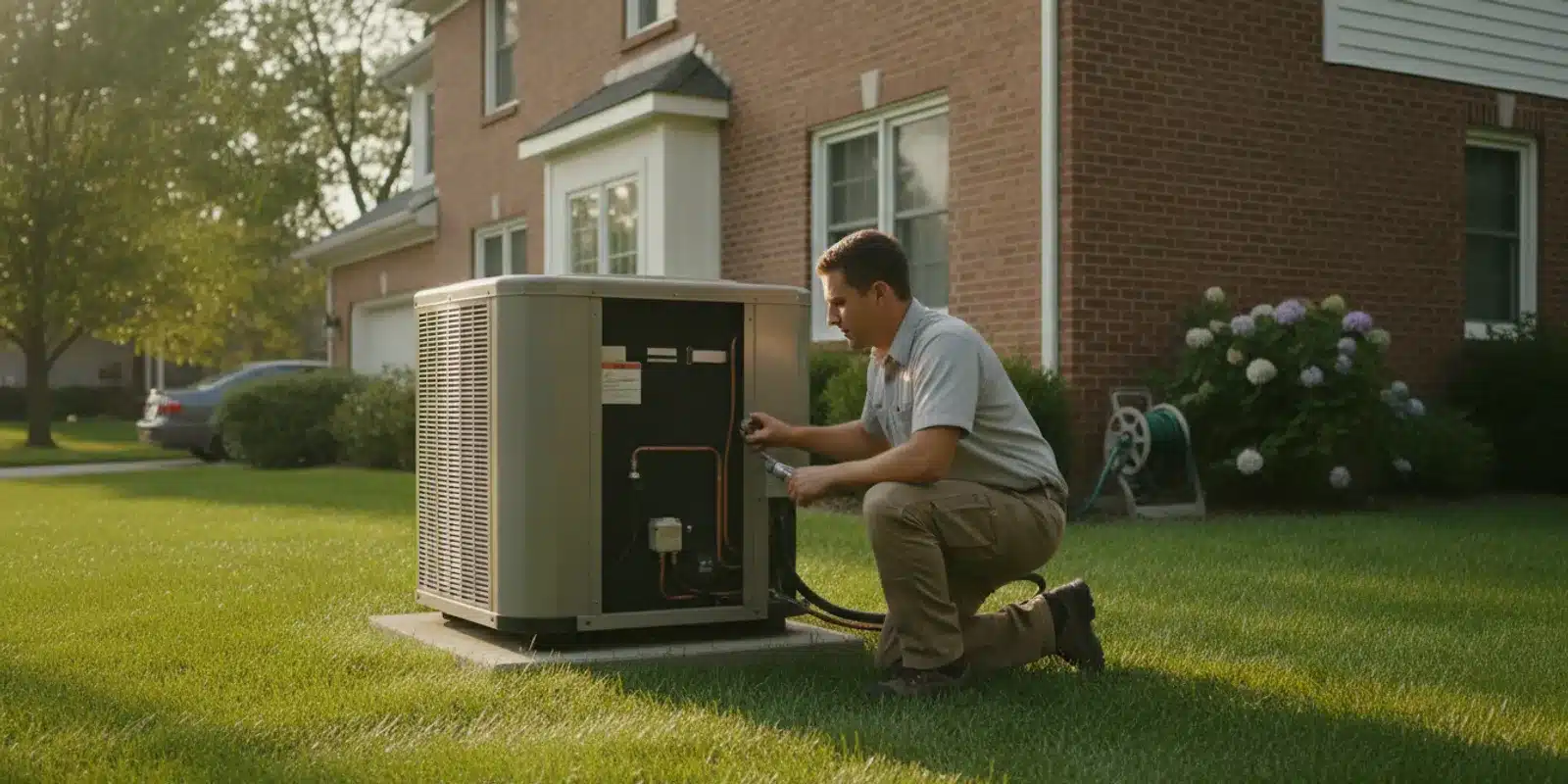
What is HVAC Preventative Maintenance and Why It Matters
HVAC preventative maintenance means scheduling regular inspections, cleanings, and tune-ups for your heating and cooling system before problems happen, not after. Here’s what it includes at a glance:
| What | Why |
|---|---|
| Filter inspection and replacement | Prevents airflow restrictions and system strain |
| Coil cleaning (evaporator and condenser) | Maintains heat transfer efficiency |
| Refrigerant level check | Ensures proper cooling capacity |
| Electrical connection inspection | Prevents unsafe operation and component failure |
| Thermostat calibration | Keeps temperature control accurate |
| Condensate drain clearing | Prevents water damage and mold growth |
| Lubrication of moving parts | Reduces friction and energy use |
| Heat exchanger inspection | Guards against carbon monoxide risk |
Most homeowners should schedule professional HVAC maintenance at least once a year — ideally twice (spring for your AC, fall for your furnace).
As Benjamin Franklin once said, “An ounce of prevention is worth a pound of cure.” That wisdom applies perfectly to your home’s HVAC system.
Your heating and cooling system is one of the most important and costly systems in your home, but many homeowners do not think about it until something breaks. And it usually happens at the worst possible time. Picture your AC quitting on a 95-degree July afternoon, with the earliest available technician still days away.
The good news? Most HVAC breakdowns can be avoided. Research consistently shows that annual maintenance helps prevent 70 to 80% of system failures, and emergency repairs often cost three to five times more than a routine tune-up.
Armor Air’s regular HVAC preventative maintenance through the Shield Protection Plan helps homeowners get the most from their heating and cooling systems while avoiding many common problems. In this guide, you’ll learn what maintenance includes, when to schedule it, which tasks you can handle yourself, and why it remains one of the smartest investments you can make in your home.
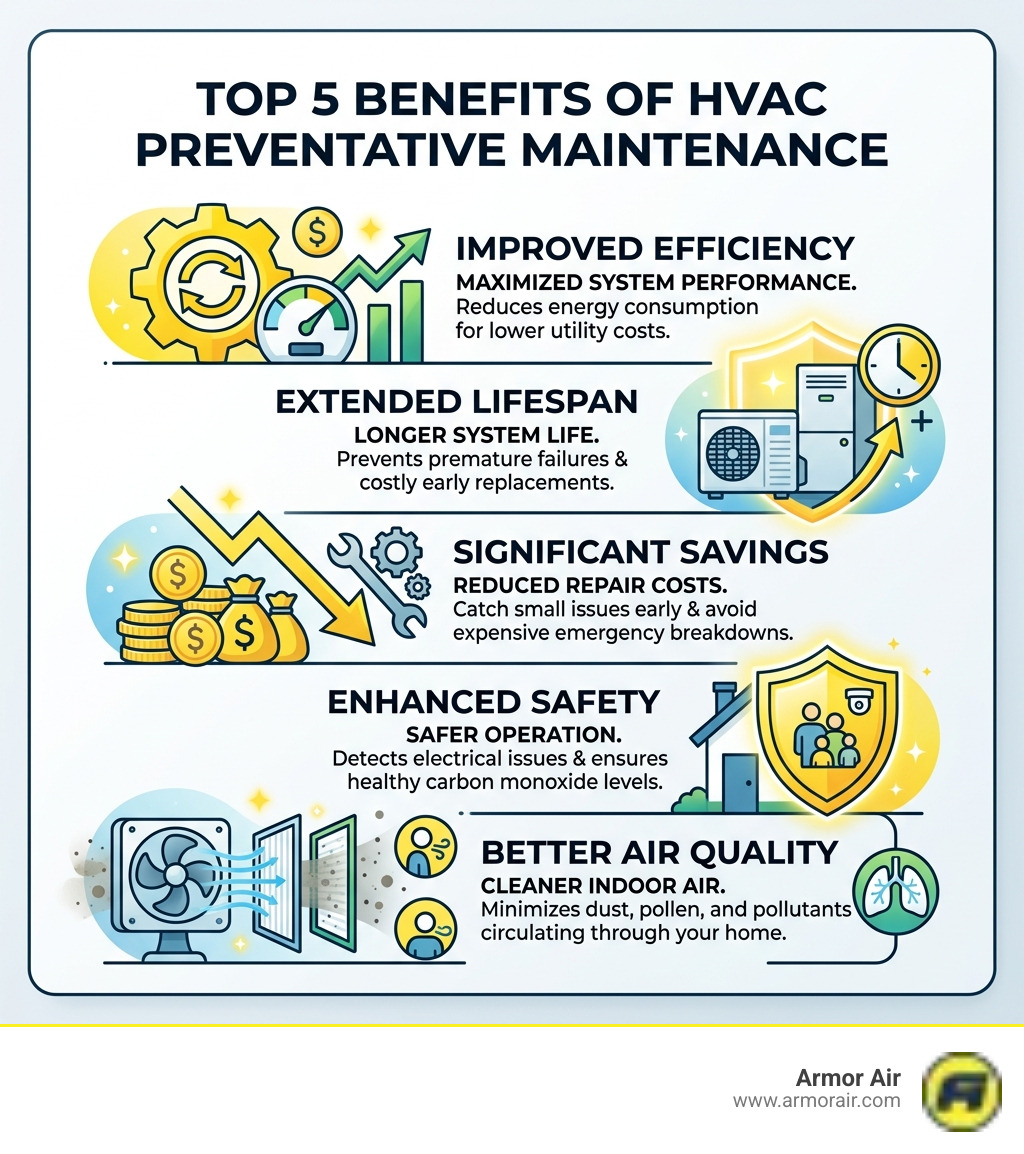
When we talk about HVAC preventative maintenance, we aren’t just talking about a quick “look-over.” We are talking about a comprehensive, proactive strategy designed to keep your system running at peak performance. Think of it like a dental checkup or an oil change for your car; you don’t wait for your engine to seize before you change the oil, right?
The “Why” behind this maintenance is rooted in physics and finance. For example, did you know that a tiny 0.042-inch coating of dust on an evaporator coil can reduce heat transfer efficiency by up to 21%? Dust acts as an insulator, forcing your system to work harder and run longer just to reach the temperature set on your thermostat.
Beyond lowering your monthly IPL or Duke Energy bill, regular HVAC maintenance offers important tune-up benefits every Indianapolis homeowner should know:
- Manufacturer Warranty Compliance: Most HVAC manufacturers (like Carrier or Trane) explicitly state in their fine print that your warranty is only valid if you can provide proof of annual professional maintenance. If your compressor fails in year five and you haven’t had a tune-up, you might be footed with a multi-thousand-dollar bill that should have been covered.
- Carbon Monoxide Safety: For those of us in Central Indiana using gas furnaces, safety is paramount. During a tune-up, we inspect the heat exchanger for tiny cracks. A cracked heat exchanger can leak carbon monoxide—a colorless, odorless “silent killer”—into your home’s air supply.
- Extended System Lifespan: A neglected system typically lasts 10 to 15 years. A well-maintained system can easily hum along for 20 years or more.
- Indoor Air Quality: Your HVAC system is the “lungs” of your home. If the internal components are coated in mold, dust, and pet dander, that’s exactly what you’re breathing.
Professional HVAC Preventative Maintenance Checklist
While there are tasks you can do yourself (which we will cover later), a professional visit is a deep dive into the mechanical and electrical heart of your system. When our technicians arrive at your Indianapolis home, they aren’t just there to change a filter.
A thorough heating maintenance visit or AC tune-up involves several technical steps that require specialized tools, such as multimeters and refrigerant gauges. We focus on areas that are invisible to the average homeowner but critical to the system’s “health.”
| Task Category | Homeowner (DIY) | Professional Technician |
|---|---|---|
| Airflow | Change filters every 30-90 days | Clean blower components and measure CFM |
| Electrical | Check thermostat batteries | Tighten connections, measure volts/amps |
| Cleaning | Clear debris from outdoor unit | Chemical coil cleaning (internal/external) |
| Safety | Test CO detectors | Inspect heat exchanger and gas pressure |
| Drainage | Pour vinegar in drain line | Clear clogs and treat with algaecide |
One of the most critical professional tasks is refrigerant charge verification. A system that is just 10% undercharged can see a 20% drop in cooling capacity. Conversely, overcharging is just as dangerous for the compressor. We also provide specialized air conditioner maintenance services in Central Indiana that include thermostat calibration, ensuring your “smart” thermostat is actually reading the room temperature correctly.
Essential Steps in a Professional HVAC Preventative Maintenance Visit
During a high-quality visit, we perform several “invisible” checks:
- Refrigerant Leak Detection: We don’t just “top it off.” If refrigerant is low, there is a leak. We find it.
- Heat Exchanger Inspection: We use specialized cameras to look for cracks or corrosion in your furnace.
- Voltage and Amp Testing: We measure the “draw” of your motors. If a motor is drawing too much power, it’s a sign that it’s about to fail.
- Burner Cleaning: For gas systems, we ensure the burners are clear of soot so you get a clean, efficient blue flame.
How System Type Influences Your HVAC Preventative Maintenance
Not all systems are created equal. In Indianapolis, we see a wide variety of setups:
- Central AC & Gas Furnaces: These are separate systems that need individual attention—AC in the spring, furnace in the fall.
- Heat Pumps: These are workhorses that run year-round. Because they provide both heating and cooling, they require a heat pump tune-up twice a year.
- Dual-Fuel/Hybrid Systems: These combine an electric heat pump with a gas furnace backup. They are highly efficient for Indiana winters but require a technician who understands how the two systems communicate. For more on this, see our Essential Guide to Heat Pump Maintenance.
Optimal Timing and Frequency for System Tune-Ups
Timing is everything. You wouldn’t want to find out your furnace is broken on the first 10-degree night in December.
We recommend a bi-annual schedule for most Central Indiana homes. The ideal windows are:
- Spring (March–May): Schedule your AC tune-up now. This ensures your system is ready for the first humid 90-degree day. Plus, technicians have more availability before the summer “emergency” rush begins.
- Fall (September–November): This is the time for your furnace or boiler check. We focus on safety, ignition, and carbon monoxide checks before the heavy lifting of winter begins.
Essential DIY Tasks for Homeowners
While we handle the heavy machinery, there are several things you can do to keep your HVAC preventative maintenance on track between our visits.
- The 30-90 Day Filter Rule: This is the single most important thing you can do. A clogged filter is the #1 cause of service calls. If you have pets or allergies, check it monthly. For more tips, see our AC Maintenance Tips for Optimal Performance.
- The 2-Foot Rule: Your outdoor condenser unit needs to “breathe.” Keep weeds, shrubs, and mulch at least two feet away from the unit. If the fins are clogged with cottonwood seeds or grass clippings, gently rinse them with a garden hose (never use a power washer!).
- Vent Obstruction Checks: Make sure your supply and return vents aren’t blocked by rugs, curtains, or furniture. Blocking vents doesn’t save money; it actually increases pressure in your ductwork and can lead to blower motor failure.
- Thermostat Health: Replace your thermostat batteries annually. Even if your unit is hardwired, those batteries act as a backup during Indiana’s frequent spring storms.
- Visual Inspection: Periodically check your “Winter Checklist” to ensure no ice is building up on your heat pump or that your condensate line isn’t dripping in a weird place. Our Winter Checklist for Efficient HVAC Maintenance provides a great roadmap for this.
The Financial ROI of HVAC Preventative Maintenance
Let’s talk numbers, because that’s where the value of HVAC preventative maintenance really shines. Industry data suggests an ROI of anywhere from 3:1 to 6:1. This means for every dollar you spend on a tune-up, you save $3 to $6 in avoided repairs, lower energy bills, and extended equipment life.
Consider these facts:
- Energy Savings: A well-maintained system uses 15% to 20% less energy. In a typical Indianapolis home, that can mean $200–$300 in savings per year.
- Avoided Emergencies: Emergency service calls on weekends or holidays can cost $300 just to get a technician to the door. Annual maintenance prevents 70–80% of these breakdowns.
- Lifespan Extension: Replacing a system five years early because it was “run into the ground” is a $10,000 mistake. Spreading that cost over 20 years instead of 12 is a massive financial win.
Frequently Asked Questions about HVAC Maintenance
How often should I schedule HVAC preventative maintenance?
For most homes in Central Indiana, we recommend professional service twice a year—once for the heating system and once for the cooling system. If you have a heat pump, a bi-annual schedule is mandatory because the system runs year-round. Consistent AC Maintenance in Indianapolis is the best way to ensure you aren’t left sweating in August.
Is annual duct cleaning a required part of maintenance?
This is a common misconception. While keeping your ducts clean is good for air quality, you don’t need to do it every year. Most homes benefit from duct cleaning every 3 to 7 years. However, if you’ve recently completed a major renovation, had a rodent infestation, or notice visible mold, you should schedule a cleaning sooner. For routine care, a standard furnace tune-up is much more critical for system performance.
Will neglecting maintenance void my manufacturer warranty?
Yes, in many cases, it will. Manufacturers view their warranties as a two-way street: they provide a quality machine, and you provide the necessary care. If you make a claim for a failed part, they may ask for “Proof of Service” records. Without professional documentation of annual tune-ups, your claim could be denied. This is why we provide detailed digital reports after every furnace tune-up and AC tune-up.
Conclusion
At the end of the day, HVAC preventative maintenance is about one thing: peace of mind. It’s knowing that when the “Polar Vortex” hits Indianapolis or a record-breaking heatwave settles over Central Indiana, your home will remain a comfortable sanctuary for your family.
At Armor Air, we are proud to serve the Indianapolis community with technicians who are not only highly knowledgeable but also genuinely care about your comfort. We don’t believe in pushy sales tactics; we believe in providing the facts so you can make the best decision for your home and your budget. Whether you need a simple filter check or a comprehensive system overhaul, our team at 2461 Directors Row is ready to help.
Do not wait for your system to show signs of trouble. Take charge of your home’s comfort. Contact our HVAC maintenance specialists to schedule your preventative tune-up today. Your wallet and your family will thank you!