How to Plan Furnace Replacement Cost Indianapolis 2025 for Your Home
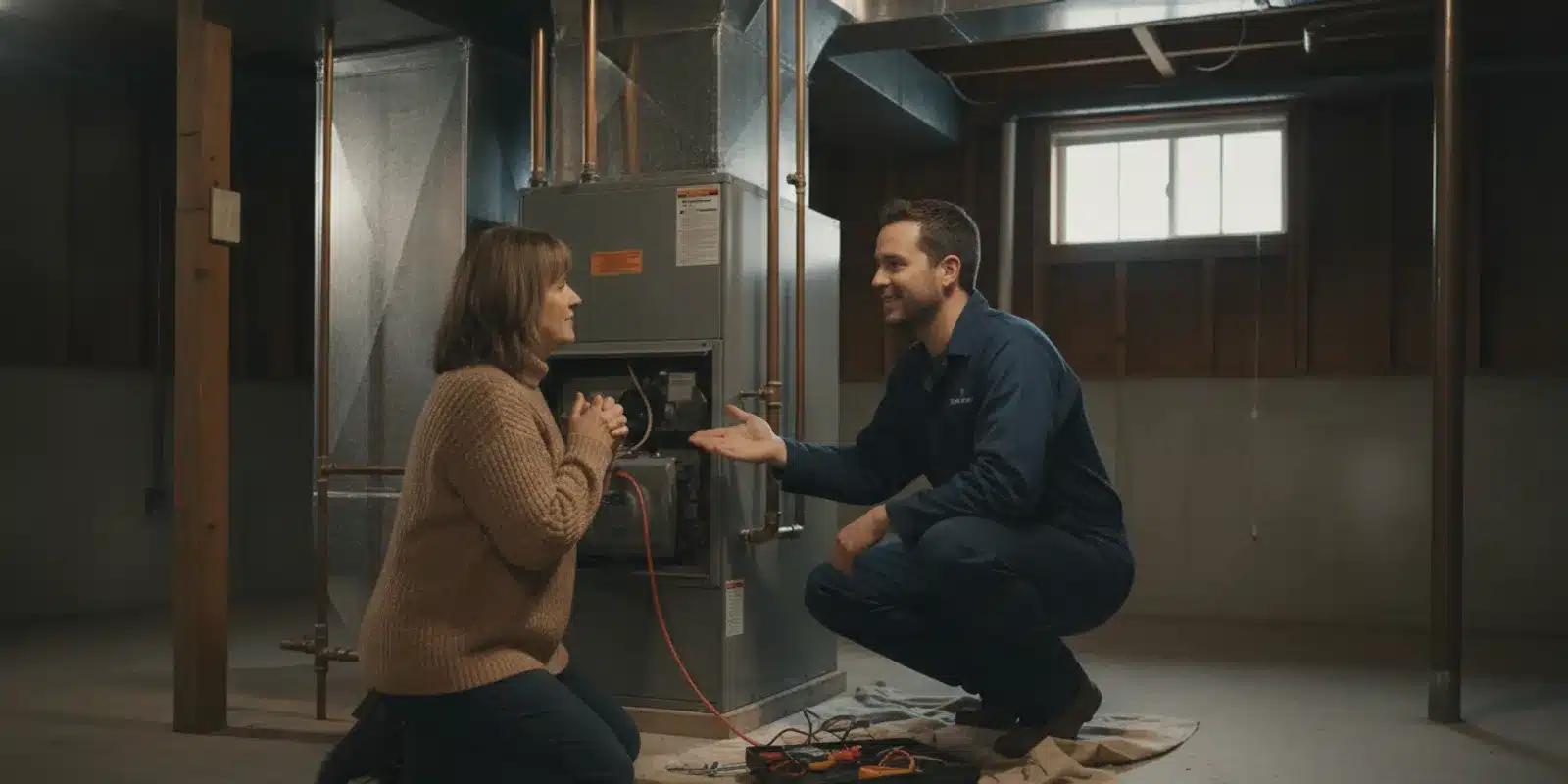
Replacing a furnace is a major home expense, but the equipment itself is only one part of the project. Your home’s size, heating load, efficiency goals, installation conditions, and connected components can all change the final total. The furnace replacement cost Indianapolis 2025 shoppers should use for planning is a range. It is not a guaranteed quote.
Request a same-day furnace estimate or call (317) 455-4448.
A professional assessment can confirm the right system, identify installation requirements, compare efficiency options, and explain available payment choices. Armor Air provides transparent, no-pressure guidance and NO TRIP CHARGE EVER. Same-day service is available Monday through Saturday, so you can request help when comfort cannot wait.
What Furnace Replacement Cost Indianapolis 2025 Means for Homeowners
For planning purposes, residential furnace installation in the Indianapolis area commonly falls within a $4,000 to $10,000 customer-guidance range. Your home size, furnace capacity, efficiency, brand, installation complexity, and required infrastructure work determine the project-specific price.
Armor Air’s customer guidance places residential furnace installation in Indianapolis in a planning range of $4,000 to $10,000. This is not a guaranteed quote. The final investment depends on the equipment selected, the home’s size, the existing system layout, and the work needed to install the new furnace safely and correctly.
Two homes with similar heating complaints may need very different replacement plans. A direct swap may be relatively straightforward, while another project may involve venting changes, electrical adjustments, condensate drainage, ductwork improvements, or access challenges. Efficiency level, brand, controls, warranty terms, and installation quality can also move the total up or down.
| Planning item | What to expect | Why it affects cost |
|---|---|---|
| Typical planning range | $4,000-$10,000 | Useful customer guidance for budgeting, not a guaranteed price. |
| Equipment selection | Varies by model | Capacity, efficiency, brand, controls, and warranty affect the plan. |
| Home and layout | Requires assessment | Size, access, duct layout, and existing connections influence the work. |
| Infrastructure needs | May add project work | Venting, drainage, electrical, or duct changes can expand the scope. |
A trustworthy estimate should explain what is included. Ask whether the proposal covers the furnace, professional installation, removal of old equipment, required adjustments, testing, and identified infrastructure work. Proper sizing matters as much as the equipment label. An oversized or undersized furnace can affect comfort, performance, and long-term value.
For broader context, review Armor Air’s furnace installation, repair, and replacement guide. This article focuses on the cost-planning questions Indianapolis homeowners are asking in 2025.
What Factors Drive Furnace Replacement Cost in Indianapolis?
The main cost drivers are home heating load, furnace capacity, efficiency rating, brand, labor, access, venting, electrical and drainage requirements, and the condition of connected ductwork. These details explain why an online range is useful for planning but cannot replace a written, home-specific estimate.
Home size and equipment price matter, but they are not the whole decision. A responsible replacement recommendation considers how the furnace will operate in the home and whether the existing installation supports the new equipment.
Home size and accurate BTU sizing
A larger home may require more heating capacity, but square footage alone does not determine the right furnace. A professional considers insulation, windows, layout, air leakage, occupancy, and the existing duct system before recommending a BTU capacity. BTU, or British thermal unit, describes the amount of heat a furnace can provide.
Oversizing is not automatically better. A furnace that is too large may cycle on and off more often. While an undersized system may run for long periods without maintaining comfort on a cold Indianapolis day. Proper sizing supports more consistent temperatures and helps you compare equipment on a useful basis.
Installation complexity and existing infrastructure
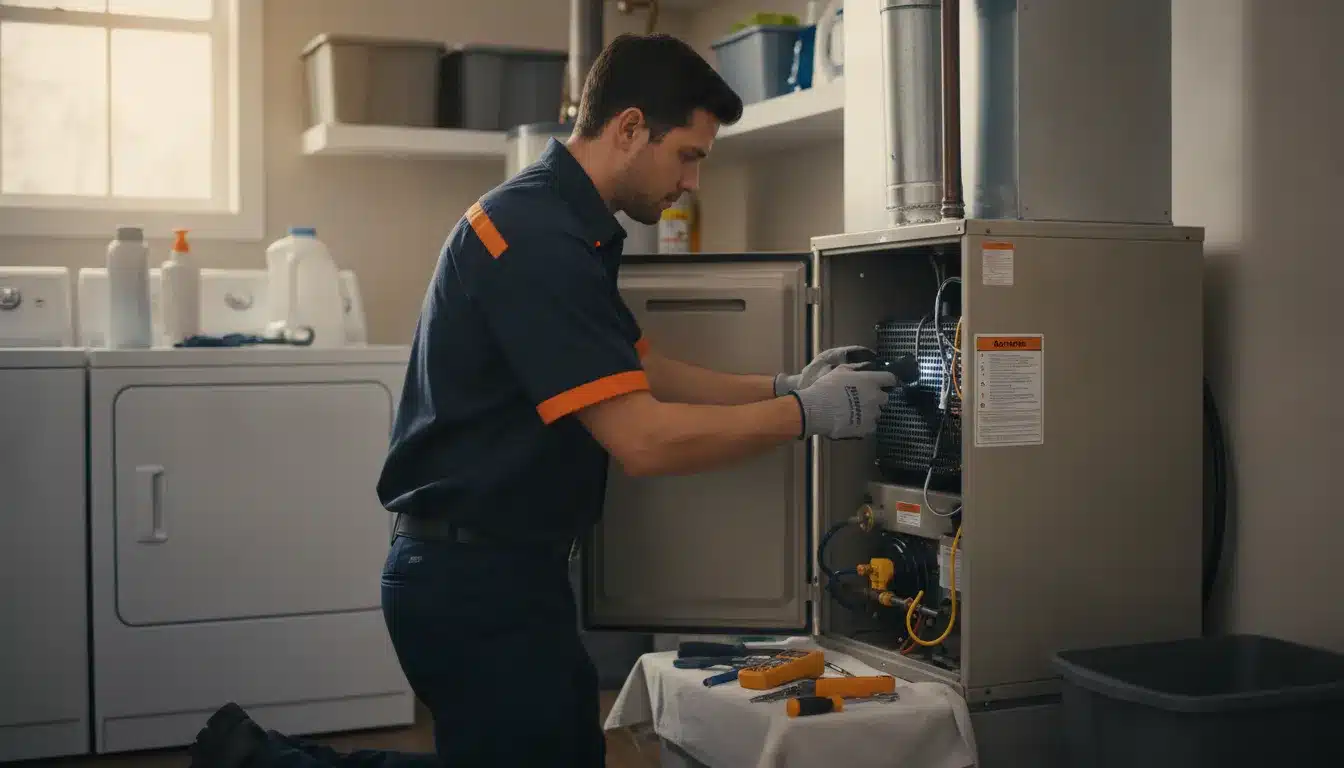
The condition and location of the current system can change labor and material needs. A replacement may require modifications to the equipment platform, gas connection, electrical components, condensate drainage, venting arrangement, or access path. Required code updates and infrastructure work should be identified before installation begins rather than appearing as a surprise after the project is underway.
Ductwork deserves attention because a new furnace cannot overcome every distribution problem. Undersized, damaged, poorly sealed, or poorly insulated ducts can reduce comfort and performance. That does not mean every replacement needs new ductwork. It means the existing distribution system should be reviewed as part of the replacement decision.
Brand, model, controls, and installation quality
Brand and model influence equipment cost, available features, warranty terms, controls, and efficiency rating. Labor is also part of the value. Correct setup, venting, testing, and adjustment help the furnace operate as intended. A professional should explain the tradeoffs instead of automatically recommending the most expensive option.
If comfort problems or frequent cycling led you to consider replacement, read about furnace short cycling and discuss the findings with a qualified technician. The goal is to solve the actual problem, not install equipment that leaves the underlying issue unresolved.
How Does Furnace Size Affect the Price?
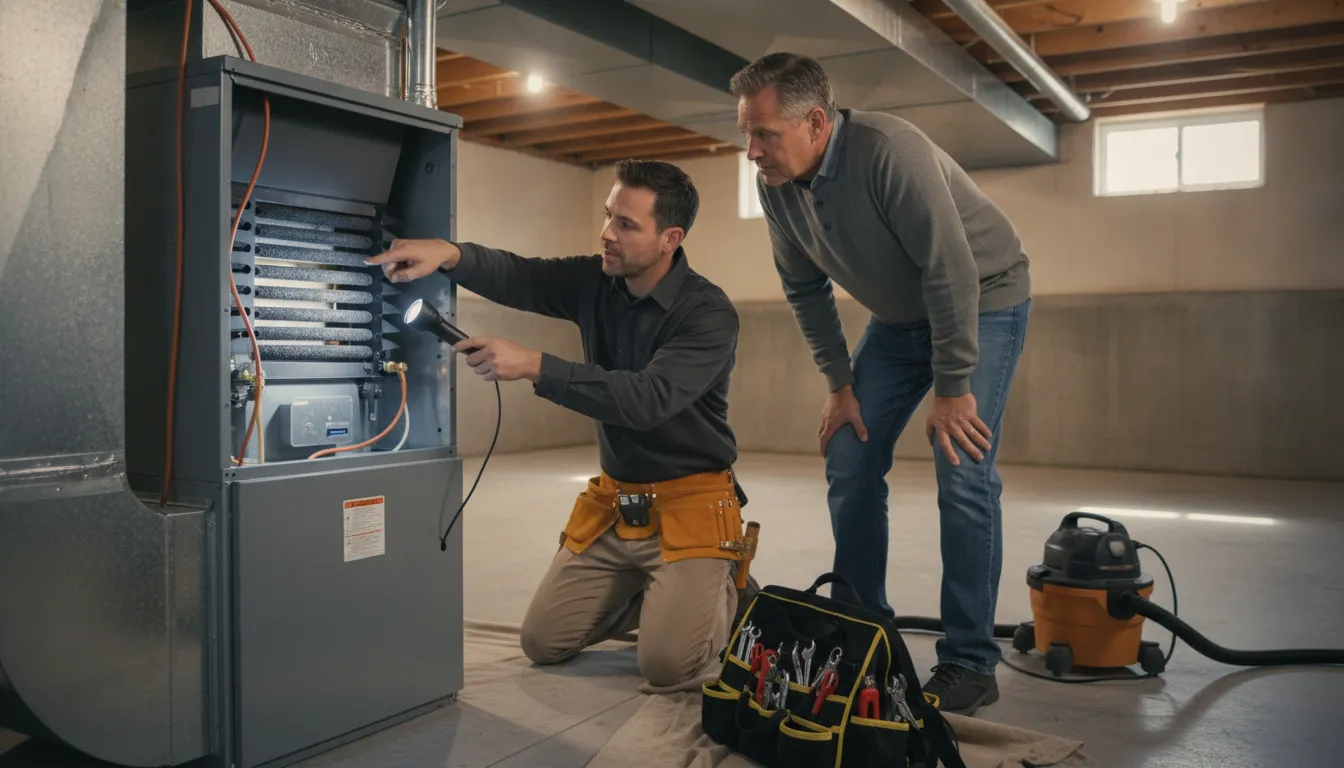
Furnace size affects equipment selection, installation requirements, operating performance, and comfort. An 80,000, 100,000, or 120,000 BTU example is not a recommendation. The correct capacity comes from evaluating the home’s heat loss, insulation, windows, ductwork, and local winter conditions.
Furnace size affects more than the equipment line on an estimate. It also influences how evenly your Indianapolis home stays warm and how often the system cycles. Indiana homes need equipment selected for local heating demands, not simply a one-size-fits-all replacement based on the old furnace label.
BTU capacity is not a recommendation
BTU describes the amount of heat a furnace can produce. The examples below show how capacity categories may affect planning and installation considerations. They are illustrative only. An 80,000 BTU furnace is not automatically a better value than a 100,000 BTU model. And a 120,000 BTU furnace is not automatically the safest choice for a larger house.
| Capacity | Possible context | Cost consideration |
|---|---|---|
| 80,000 BTU | May suit some smaller or well-insulated homes. | Correct fit depends on measured heating needs. |
| 100,000 BTU | May appear in homes with greater heat loss. | Setup needs can differ from smaller systems. |
| 120,000 BTU | May suit a home with demonstrated heating demand. | Higher capacity can add equipment and installation cost. |
Why bigger is not always better
An oversized furnace can reach the thermostat setting quickly and cycle off before distributing heat evenly. That may contribute to temperature swings, unnecessary wear, and less comfortable rooms. An undersized furnace may run for long periods without keeping up on cold days. Both outcomes can make new equipment feel disappointing even when the furnace itself is efficient.
The right size comes from a room-by-room load calculation that considers home size, insulation, windows, layout, air leakage, and local design conditions. The existing duct system and installation layout matter too. Ask for the sizing method and written options instead of accepting a replacement based only on the capacity of the old furnace.
Does Efficiency Change the Cost of a New Furnace?
Yes. A higher-efficiency furnace may cost more initially because of its equipment and installation requirements, but it converts more fuel into usable heat. The best value depends on the home’s heating needs, ductwork, expected ownership period, budget, and correct installation, not on the highest efficiency rating alone.
Efficiency is one factor that can change both the equipment price and the way a replacement performs over time. The right choice depends on your home’s heating needs, expected use, budget, duct performance, and how long you expect to own the home.
What AFUE means for your decision
AFUE stands for Annual Fuel Utilization Efficiency. It represents the percentage of fuel energy converted into usable heat over a typical year. For example, a 90% AFUE furnace converts about 90% of its fuel energy into usable heat, while the remainder leaves through the flue or elsewhere. A higher rating can be useful, but it should be matched to the home and installation.
When comparing options, ask how much the efficiency upgrade adds to the installed cost and why the proposed system fits your home. A higher rating is not automatically a better value if the furnace is oversized, poorly installed, or incompatible with the existing setup. A clear estimate should explain the expected tradeoff without promising a specific savings amount.
Why ducts matter as much as the furnace
AFUE describes the furnace itself. It does not account for heat lost after air leaves the equipment. Duct leakage, poor insulation, restricted airflow, and disconnected runs can affect comfort and operating performance. A new high-efficiency furnace may not deliver the expected result if the distribution system has significant problems.
Ask whether the estimate includes an evaluation of accessible ductwork, supply and return airflow, and the condition of existing connections. This does not mean every replacement requires duct changes. It means the furnace and distribution system should be considered together, especially when improved comfort or efficiency is the goal.
- What is the proposed furnace’s AFUE rating, and why is it appropriate for my home?
- How much does the efficiency upgrade add to the installed price?
- Were the home’s heating needs evaluated rather than copied from the old furnace?
- Are duct repairs or airflow improvements recommended separately?
- Which parts of the proposal are required, and which are optional?
Should You Repair or Replace an Older Furnace?
Repair may make sense when the problem is isolated and the furnace is otherwise dependable. Replacement deserves closer consideration when repairs recur, comfort remains inconsistent, safety concerns appear, or a major component fails. Compare repair scope, system condition, expected service life, efficiency, and installation value before deciding.
There is no single furnace age that automatically makes replacement the right answer. The better decision comes from reviewing repair history, heating performance, safety condition, operating costs, and likely future repairs together. A professional evaluation can help you compare the next repair with the longer-term value of a new system without pressure.
When repair may still make sense
Repair can be reasonable when the problem is isolated, the furnace has generally been dependable, and the repair restores safe, consistent operation. It may also make sense when the expected repair is modest compared with replacement. Ask what failed, why it failed, whether other parts show wear, and how the repair changes the system’s expected reliability.
Comfort complaints should be investigated before assuming the furnace itself needs to be replaced. Restricted airflow, duct problems, control issues, or a mismatched system can all affect how a home feels. If your furnace is blowing cool air, review common furnace blowing cold air causes alongside the inspection findings.
When replacement deserves a closer look
Replacement deserves serious consideration when repairs keep recurring, comfort remains inconsistent after service, or the furnace requires a major component. Rising utility costs can also change the calculation, particularly when an older system uses more fuel to deliver the same comfort. Replacement creates an opportunity to compare current efficiency options, sizing, installation quality, and ductwork concerns as one plan.
Safety concerns should never be treated as a reason to postpone professional service. Unusual odors, visible damage, repeated shutdowns, or concerns identified during an inspection call for qualified evaluation. Do not attempt to diagnose or repair combustion components yourself. If short cycling is part of the problem, discuss the symptom with a professional before choosing equipment.
How Furnace Replacement Cost Indianapolis 2025 Fits Your Budget
Armor Air offers a 0% APR promotional financing option for 12 months through GreenSky for eligible customers, subject to approval, merchant availability, and current terms. Compare the complete installed price, promotional period, payment schedule, and any post-promotional terms. A lower monthly payment does not automatically mean a lower total cost.
A new furnace is a significant home expense, so the payment plan deserves the same careful review as the equipment. Start with the complete project price, not just a promotional payment. The written estimate should show what is included, such as the furnace, professional installation, required adjustments, removal, and approved infrastructure work.
Armor Air offers 0% APR promotional financing for 12 months through GreenSky for eligible customers, subject to approval and merchant availability. Current terms apply. This is not a guarantee of approval or a promise that every replacement will qualify. Ask for the applicable details before making a decision.
- Total project price: Compare the full installed cost, including equipment, labor, permits when applicable, and clearly identified additions.
- Promotional term: Confirm how long the 0% period lasts and what happens after it under the current agreement.
- Out-of-pocket amount: Ask whether a deposit or down payment is expected and how it changes the remaining balance.
- Payment schedule: Make sure required payments fit your household budget, particularly if the balance must be handled by the end of the promotional term.
A lower monthly amount does not automatically mean a lower total cost. Likewise, choosing the least expensive furnace without considering sizing, efficiency, comfort, or installation quality may create costs later. A transparent estimate should give you enough information to compare those tradeoffs without pressure.
How to Get a Same-Day Furnace Replacement Estimate
To get a useful same-day estimate, gather basic furnace information, describe your home’s layout and comfort concerns, request a full installation assessment, and ask for written options. Armor Air offers same-day service Monday through Saturday and NO TRIP CHARGE EVER, helping homeowners review next steps without an added trip charge.
A same-day estimate can help you make a calm, informed decision when your Indianapolis furnace is unreliable or nearing the end of its service life. The goal is to understand your home’s needs, compare practical options, and see what the project involves before approving work.
- Gather basic information. Note the furnace’s approximate age, manufacturer, model if easy to find, and the problem you noticed. Share whether the system is failing to heat, making unusual noises, cycling repeatedly, or requiring frequent repairs. Do not remove panels or attempt repairs to find this information.
- Describe your home and scheduling needs. Share the home’s approximate size, furnace location, access concerns, recent remodeling, and known ductwork issues. Ask for a same-day appointment window. Armor Air offers same-day service Monday through Saturday and closes Sundays for God and Family time.
- Request a full installation evaluation. The professional should assess heating needs, system sizing, existing layout, venting, ductwork, installation requirements, and connected components. A larger furnace is not automatically the better choice. The recommendation should fit the home.
- Request clear options and written pricing. Ask what each system includes, how efficiency affects expected operation, what labor is covered, and whether infrastructure changes are needed. Exact cost depends on the assessment, equipment, home size, and installation complexity.
- Review the next step without pressure. Compare comfort priorities, budget, system condition, efficiency, warranty coverage, and included work. If you need time, ask questions before authorizing replacement.
Armor Air can explain repair-versus-replacement choices and provide transparent options for Indianapolis homeowners. The best way to turn a general 2025 planning question into an accurate recommendation is a professional, home-specific assessment.
Request a written furnace replacement estimate before the FAQ, or call (317) 455-4448.
Frequently Asked Questions
Furnace replacement cost varies by home and installation. The most useful questions address the planning range, capacity, efficiency, repair-versus-replace decision, financing terms, and how to request a same-day assessment. The answers below provide practical starting points without replacing an in-home evaluation.
What is the average furnace replacement cost in Indianapolis?
There is no single average for every Indianapolis home. Armor Air’s customer guidance places residential furnace installation in a $4,000 to $10,000 planning range. Furnace size, efficiency, brand, labor, installation complexity, and ductwork or infrastructure needs affect the final project-specific price.
What factors influence furnace replacement costs in 2025?
The biggest factors are the home’s heating load, BTU capacity, efficiency rating, equipment selection, labor, venting, drainage, electrical requirements, and the condition of the existing installation. A properly sized system may cost more or less than a direct replacement, but it is a better basis for dependable comfort.
Does system efficiency impact furnace replacement cost?
Yes. AFUE shows how much of a furnace’s fuel becomes usable heat. Higher-efficiency equipment can change the upfront price and may reduce fuel use over time. The best choice depends on sizing, ductwork, installation quality, expected ownership, and budget rather than the rating alone.
Is it better to repair or replace an old furnace?
Consider the furnace’s repair history, comfort consistency, operating costs, safety condition, and likely future repairs. A professional should explain both options in writing, including expected value and remaining service life. If the decision is unclear, a second opinion can help you choose without pressure.
How can I request a same-day furnace replacement estimate?
Contact Armor Air at (317) 455-4448 to request service. Same-day appointments are available Monday through Saturday, and Armor Air offers NO TRIP CHARGE EVER. Have your address, furnace age if known, comfort concerns, and recent repair details ready.
Ready to Request Your Furnace Replacement Estimate?
A professional estimate can help you compare system options, efficiency, and installation needs before making a major home decision. Armor Air provides straightforward guidance for Indianapolis homeowners, with transparent options and no-pressure recommendations. Same-day service is available Monday through Saturday, and there is NO TRIP CHARGE EVER.
Request a same-day furnace replacement estimate or call (317) 455-4448 to get started.