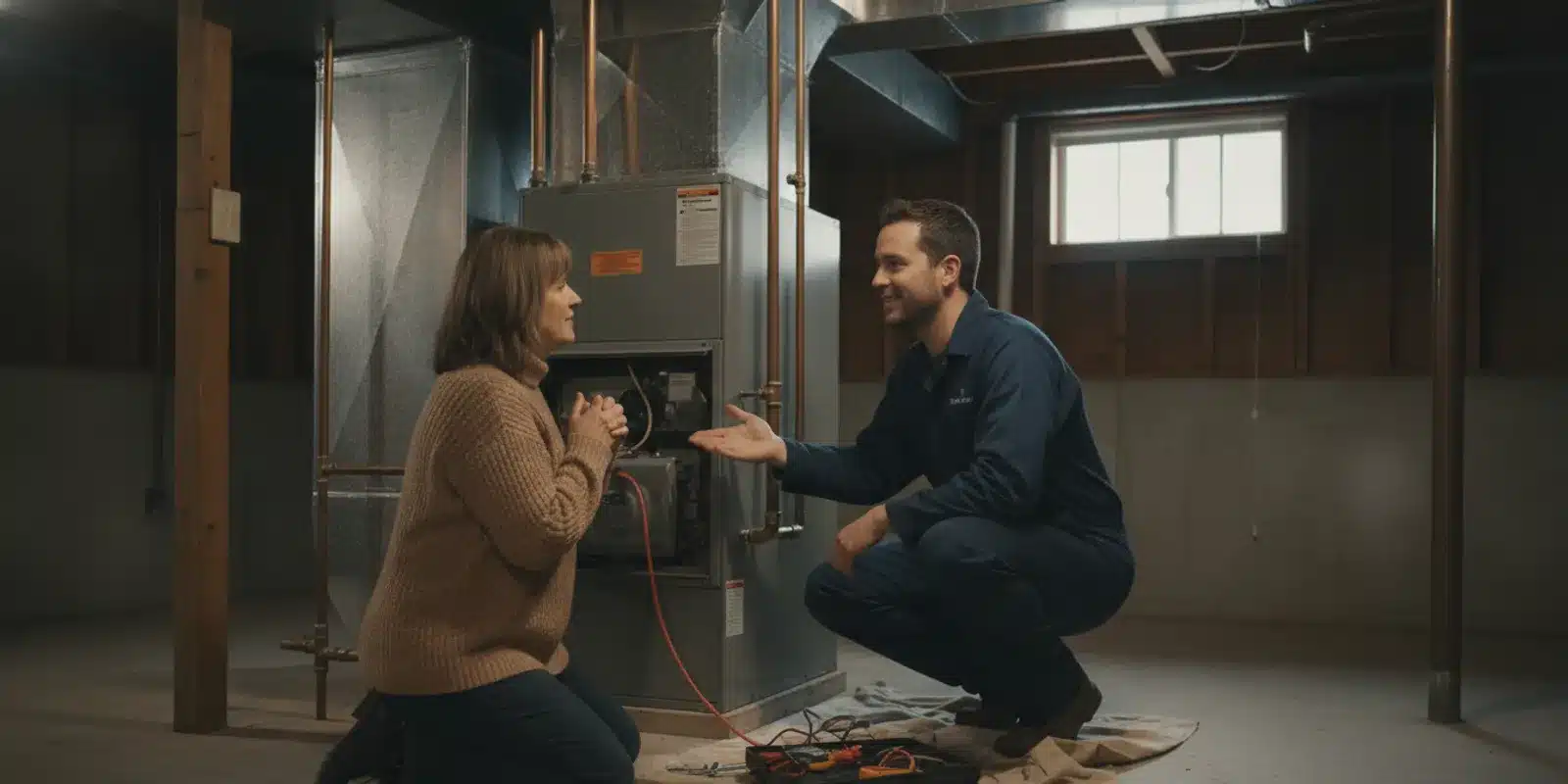
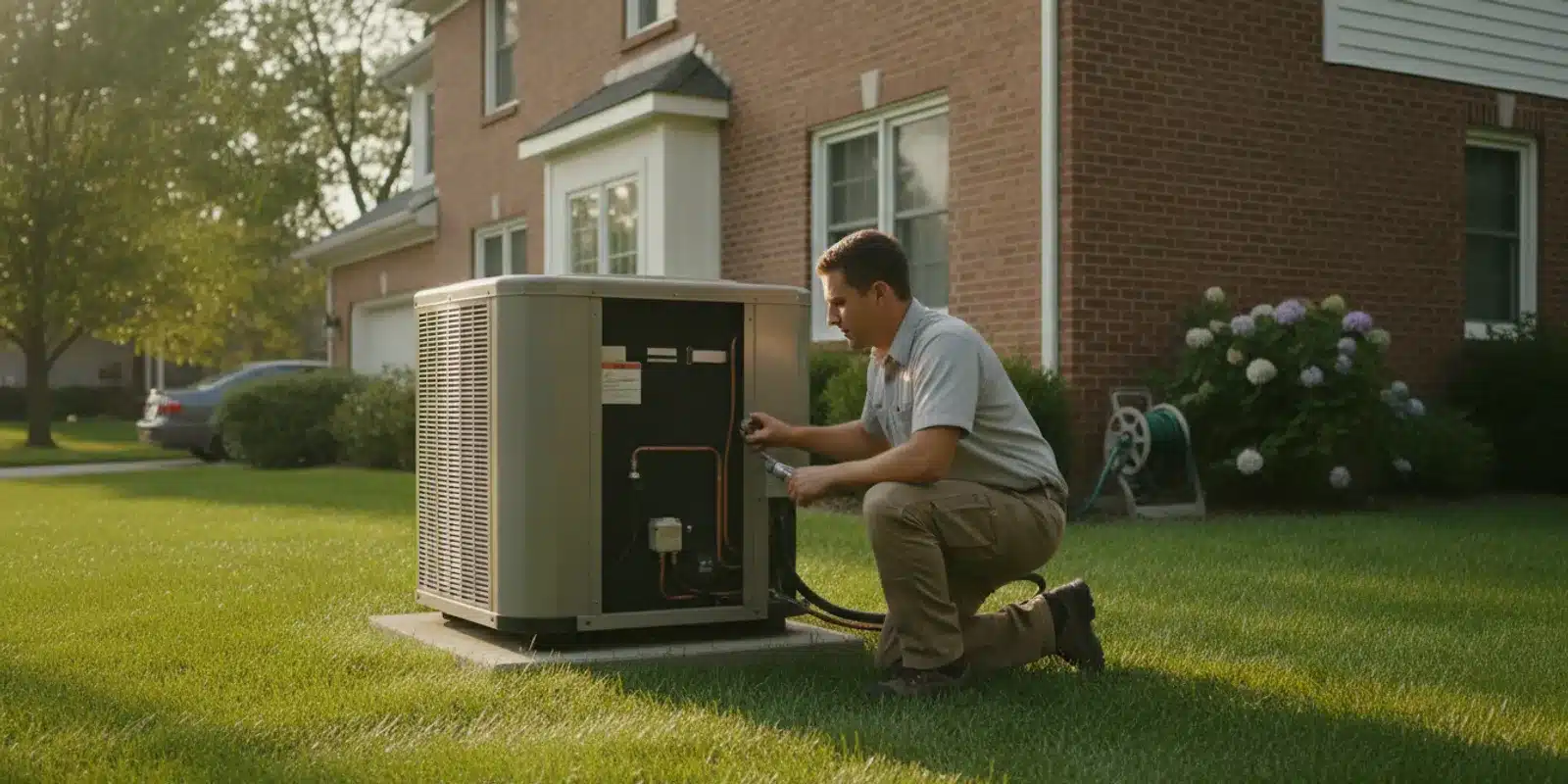
Most well-maintained furnaces last about 15 to 20 years. Installation quality, maintenance, airflow, runtime, and safety condition matter as much as the date on the equipment. In Indianapolis, a professional evaluation can help you decide whether to maintain an older furnace or plan a replacement before a winter breakdown.
Call Armor Air at (317) 455-4448 for same-day furnace guidance with NO TRIP CHARGE EVER.
How long does a furnace last? A well-maintained furnace commonly lasts 15 to 20 years. Some systems may operate longer when they are correctly sized, professionally installed, and consistently serviced. The range is a planning guide, not a guarantee, so age should be considered alongside repairs, comfort, efficiency, and safe operation.
For broader help with installation, repair, and replacement decisions, visit Armor Air’s furnace installation, repair, and replacement services. The sections below explain the practical factors that shape furnace life without replacing a technician’s inspection.
How Long Does a Furnace Last in Indianapolis?
For many Indianapolis homeowners, 15 to 20 years is a reasonable expected service-life range for a furnace that has received proper care. Carrier gives the same general range for a well-maintained furnace and notes that some high-quality systems can perform reliably longer. Those figures describe common outcomes, not a promise for every home or model.
Age is useful because older equipment deserves closer planning. It is not an automatic replacement deadline. A 16-year-old furnace with a clean maintenance history, stable comfort, and no safety concerns may be a candidate for continued service. A younger furnace with repeated failures, poor installation, or uneven heating may deserve an earlier evaluation.
What changes the expected lifespan?
When estimating how long a furnace will last, look at its full operating history:
- Was the system sized correctly for the home’s heating load?
- Was the furnace installed and commissioned by qualified professionals?
- Has it received regular inspection and maintenance?
- Does it heat the home evenly during Central Indiana cold weather?
- Are repairs becoming more frequent or affecting the same components?
- Does the system also run the blower for central air conditioning?
These questions help separate a normal aging system from one that has been under unusual stress. They also give a technician useful context during an evaluation. Write down the answers before scheduling service so the visit can focus on the most important concerns.
The furnace label can provide useful clues, including the model number, fuel type, and approximate manufacturing date. Keep that information with your service records, but do not treat the date as a stand-alone diagnosis. A system’s condition, installation history, and repair pattern tell you more about whether it can continue serving the home reliably.
Why Does Indiana Climate Affect Furnace Life?
Indianapolis furnaces often work hard during extended cold periods, then the blower may continue operating as part of the home’s central cooling system in summer. Climate, frequency of use, and year-round air-handler duty are recognized furnace lifespan factors. That means two furnaces of the same age can have very different amounts of wear.
Runtime and cycling add up
Every heating cycle asks the system to ignite, transfer heat, move air, and shut down safely. Long winter run times place ongoing demands on the heat exchanger, blower motor, ignition components, controls, and other parts. Frequent starts and stops can also signal sizing, thermostat, airflow, or equipment concerns that deserve professional attention.
Runtime does not prove that a furnace needs replacement. It does explain why a heavily used system may show wear sooner than a comparable furnace in a milder climate. Watch for changing behavior, such as longer cycles, unusual sounds, weak airflow, or rooms that no longer reach the set temperature.
Indianapolis homes also vary in insulation, window exposure, ceiling height, and duct layout. Those differences change the heating load and can make one room feel uncomfortable even when the furnace itself is operating normally. A whole-system evaluation is more useful than assuming the equipment age explains every comfort complaint.
Airflow and ductwork influence performance
A furnace can be in good condition while the home remains uncomfortable if air cannot move properly. Restricted filters, blocked registers, damaged ducts, poor balancing, and inadequate insulation can all affect delivery. The U.S. Department of Energy explains that duct losses can be significant when ducts run through unconditioned areas. ENERGY STAR also recommends considering the condition and performance of the complete heating system when replacement is evaluated.
Keep registers clear of furniture and drapes, and follow the equipment manufacturer’s filter guidance. If some rooms remain cold or airflow becomes weak, ask a qualified professional to assess the furnace and duct system together. Armor Air’s air duct repair service is a relevant next step when distribution problems are part of the concern.
- Note whether heating cycles are becoming longer or more frequent.
- Compare comfort between rooms and floors.
- Listen for new blower, ignition, or register noises.
- Record repeated repairs and when they occurred.
How Does Maintenance Help a Furnace Last Longer?
Maintenance cannot reverse normal aging, but it can help a furnace operate with less strain and reveal developing concerns earlier. Carrier identifies regular maintenance and qualified inspections as factors that can support longer service life. Annual professional service before the coldest part of the Indianapolis heating season gives homeowners a clearer picture of condition and reliability.
What a professional furnace inspection can evaluate
A qualified technician may review burner operation, the heat exchanger, ignition and safety controls, electrical connections, blower performance, thermostat communication, airflow, and visible signs of wear. The exact work depends on the equipment and service plan. Combustion, gas, electrical, and ventilation concerns should be evaluated by a qualified professional rather than treated as a homeowner repair project.
A yearly visit also creates a useful record. If the furnace later needs a repair or replacement decision, the service history helps show whether the issue is isolated or part of a larger pattern. For a related overview of preventive care, see what is included in an HVAC tune-up.
That record can also make seasonal planning easier. Note the furnace age, service dates, parts replaced, comfort concerns, and recommendations that were deferred. When a technician can see the pattern, the conversation can focus on the home’s actual needs instead of a guess based on one noisy start or one cold room. This approach supports a measured decision and helps avoid replacing a system solely because it has reached a round-number birthday.
Simple care between professional visits
- Replace or clean the filter on the schedule recommended for that filter and furnace.
- Keep supply registers and return grilles unobstructed.
- Pay attention to uneven temperatures, unusual smells, and changes in sound.
- Tell the technician about recurring comfort problems instead of masking them with repeated thermostat changes.
These are observation and maintenance habits, not step-by-step repair instructions. If a furnace stops heating, develops a serious odor, or raises a safety concern, stop using it when appropriate and request professional guidance.
When Should You Start Planning Furnace Replacement?
You do not have to wait for a complete failure to discuss replacement. Planning earlier gives you time to compare suitable equipment, review the duct system, and make a decision without the pressure of an emergency during an Indianapolis cold snap. The best timing depends on age, repair history, comfort, efficiency, and safety.
Age is a planning signal
When a furnace approaches 15 years, begin gathering information even if it still runs. This does not mean the system must be replaced immediately. It means the household should understand its condition and know which options may fit the home. If you do not know the furnace’s age, a technician can help identify its approximate age and evaluate its condition.
For a separate symptom-focused resource, review these furnace replacement warning signs. That article covers end-of-life symptoms, while this guide focuses on expected service life and the timeline for planning.
Look for patterns, not one isolated repair
Repeated breakdowns, declining comfort, longer cycles, and increased service needs can make continued operation less predictable. There is no single repair rule that applies to every home. Instead, compare the system’s reliability with the cost and disruption of repeated service, while also considering whether a repair can solve the underlying problem.
- Continue maintenance: The furnace is operating safely, comfort is stable, and repairs are limited and reasonable for the system’s condition.
- Schedule an evaluation: The system is aging, comfort has changed, or repairs are becoming more common.
- Plan replacement: The furnace combines advanced age with repeated failures, declining performance, or a professional safety concern.
The goal is not to push every older furnace toward replacement. It is to give homeowners enough information to choose repair, maintenance, airflow work, or replacement with less pressure.
Is a High-Efficiency Furnace Worth Considering?
A high-efficiency furnace may be worth considering when an older system has declining performance, higher fuel use, repeated repairs, or a replacement need. The right choice depends on the home’s heating load, ductwork, comfort goals, venting, and budget. A higher AFUE rating alone cannot correct poor sizing or heat lost through damaged ducts.
What AFUE tells you
AFUE, or Annual Fuel Utilization Efficiency, estimates how much of a fuel’s energy becomes heat for the home over a year. The U.S. Department of Energy explains that a 90% AFUE furnace converts 90% of that fuel energy into heat, with the remainder lost through venting and elsewhere. AFUE does not include losses through the distribution system.
Before comparing equipment, have a professional consider:
| Factor | Why it matters |
|---|---|
| Condition | Repair history and safety operation show whether continued service is dependable. |
| Sizing | Correct capacity supports comfort and helps avoid unnecessary cycling. |
| Duct delivery | Sealing, insulation, and airflow affect how much heat reaches living spaces. |
| Efficiency | AFUE helps compare fuel-use performance, but it is only one part of the system. |
| Installation | Professional setup supports safe operation and reliable performance. |
Armor Air’s heating and cooling team can evaluate the furnace and related system before you decide. A transparent repair-versus-replacement conversation is more useful than selecting equipment by age or efficiency label alone.
Ask what the evaluation found, which work is urgent, and which recommendations can wait. You can also ask whether the existing ductwork, thermostat, and electrical connections are compatible with a replacement. Clear answers help you compare the complete system rather than focusing on a single equipment number.
Homeowners should also consider how long they expect to remain in the house, whether certain rooms have persistent comfort problems, and whether the current furnace has a dependable service history. These details do not produce a universal answer, but they make the replacement conversation more specific to the home.
Frequently Asked Questions About Furnace Lifespan
How long does a furnace last on average?
A well-maintained furnace commonly lasts about 15 to 20 years. Correct sizing, professional installation, regular service, airflow, runtime, and safe operation can move the result higher or lower.
Should I replace my furnace after 15 years?
Not automatically. Around 15 years is a good time to evaluate condition and begin planning. A safe, reliable furnace may continue operating, while repeated repairs or declining comfort may support replacement sooner.
Does furnace maintenance really extend service life?
Maintenance cannot stop normal aging, but professional inspections and manufacturer-recommended filter care can reduce strain and identify developing issues earlier. Maintenance also gives you better information for repair or replacement planning.
Can poor ductwork shorten furnace life?
Yes. Restricted, damaged, or poorly balanced ductwork can make the heating system work harder and can leave rooms uncomfortable. A professional can evaluate airflow and duct delivery along with the furnace.
What should I do if my older furnace stops working?
Do not attempt combustion or electrical repairs yourself. If there is a safety concern, stop using the system when appropriate and contact a qualified HVAC professional. An evaluation can determine whether repair or replacement is the safer next step.