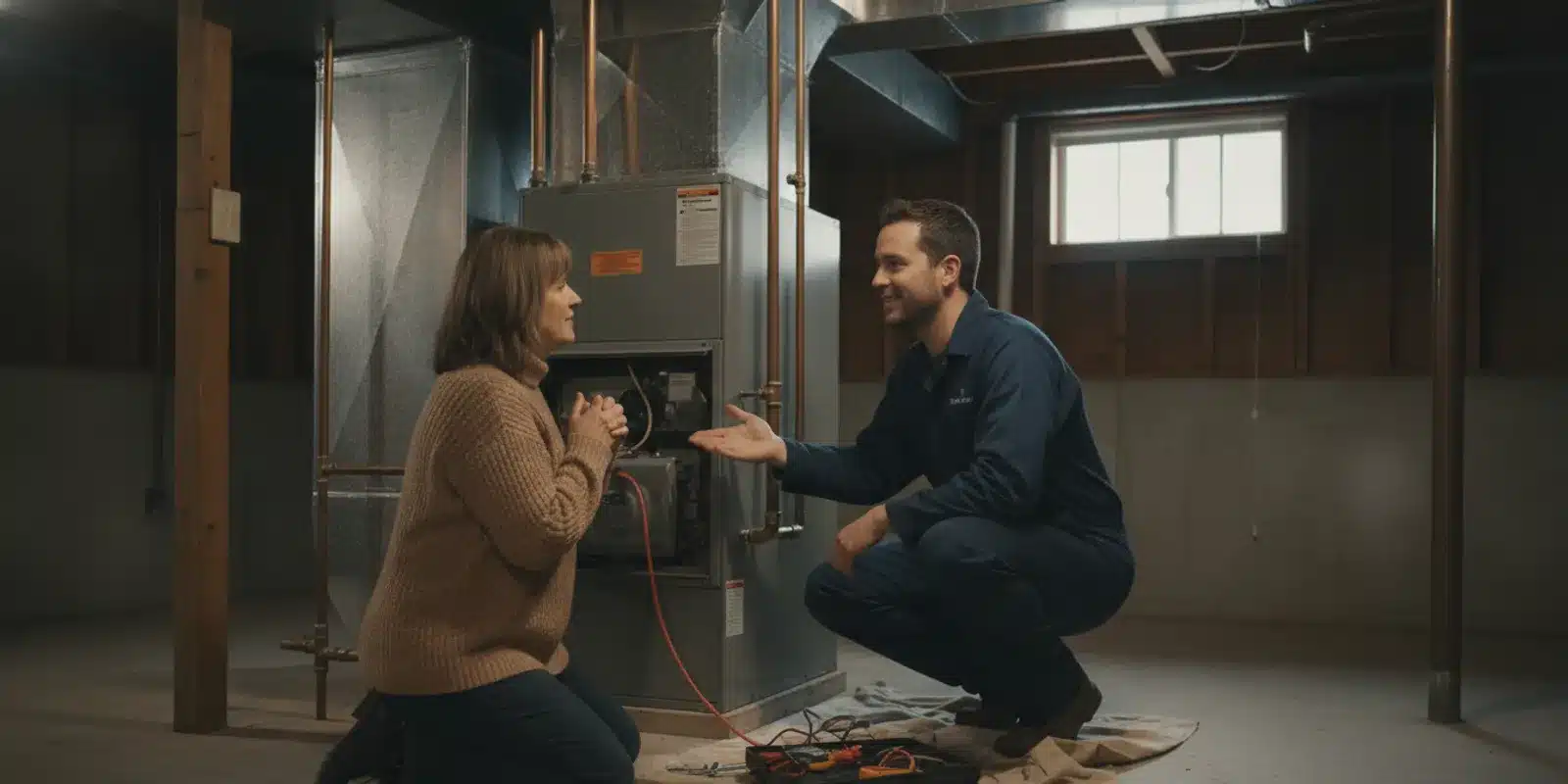
When an Indianapolis furnace needs replacement, the highest efficiency rating is not automatically the best financial choice. An 80 AFUE model may cost less to install, while a 96 AFUE furnace uses more of the fuel it burns and may reduce operating costs over years of heating.
Whether a high efficiency furnace 96 afue vs 80 afue worth it upgrade makes sense depends on your home’s heating load, insulation, ductwork, gas use, expected time in the home, and the installation difference. A 96 AFUE model can be a strong long-term choice for a high-demand home, but an accurately sized 80 AFUE furnace may fit a tighter budget or a home with different installation constraints.
Before estimating savings or payback, it helps to understand what AFUE actually measures and why the rating affects energy use without predicting your exact utility bill.
What AFUE Means and Why It Matters for Your Energy Bill
AFUE stands for Annual Fuel Utilization Efficiency. It measures how much of a furnace’s fuel becomes useful heat in your home over a typical heating season. The rest is lost, primarily through exhaust. It is a seasonal efficiency rating, not a promise about one month’s gas bill.
For example, an 80 AFUE furnace converts about 80% of the energy in its fuel into heat, while roughly 20% leaves as exhaust. A 96 AFUE furnace converts about 96% into useful heat, leaving less energy unused. The higher-efficiency model can provide the same general heating output while using less fuel. Your actual results depend on the home’s heating demand, equipment sizing, weather, fuel use, and utility rates.
What changes between 80 and 96 AFUE?
Many 96 AFUE furnaces recover more heat from combustion exhaust before it exits the system. This commonly involves a secondary heat exchanger. As the exhaust cools, moisture can condense, so the installation must safely manage that condensate. The process captures energy that a conventional furnace would otherwise send outdoors.
That extra efficiency does not automatically make every replacement the right fit. When comparing a high efficiency furnace 96 AFUE vs 80 AFUE, consider these questions:
- How much fuel the home currently uses during a normal heating season.
- How long you expect to remain in the home.
- Whether the furnace is correctly sized for the home’s heating load.
- Whether venting, condensate drainage, and available installation space support the selected model.
A higher AFUE rating has greater potential value in a home with substantial heating demand. The rating alone cannot predict a fixed dollar amount or payback period. An oversized furnace can short-cycle, reducing comfort and efficiency regardless of its AFUE rating. Ductwork and airflow also matter because a high-rated furnace cannot compensate for distribution problems throughout the home.
In practical terms, AFUE helps you compare how efficiently two furnaces use fuel. It should be considered alongside installation requirements, equipment sizing, comfort goals, and your household budget. A professional evaluation can show whether the additional efficiency is supported by your home’s conditions, rather than treating 96 AFUE as the universal answer.
For the technical details behind high-efficiency gas furnace operation and heat recovery, see the U.S. Department of Energy Building America guide.
Is a High Efficiency Furnace 96 AFUE vs 80 AFUE Worth It in Indianapolis?
For many Indianapolis homeowners, a 96 AFUE furnace can be worth considering. The answer depends on how much you heat your home, how long you expect to stay, and whether the rest of the system supports the upgrade. A higher rating does not automatically guarantee a faster payback. It is one part of a larger replacement decision.
Heating demand is an important starting point. A home that runs its furnace frequently through Central Indiana winters has more opportunity to benefit from using fuel efficiently than a home with modest heating needs. The U.S. Department of Energy explains that high-efficiency gas furnaces capture more heat before exhaust leaves through the flue, which can reduce fuel consumption. Actual savings still depend on operating conditions and the condition of the home.
How your home affects the value of 96 AFUE
Insulation, air sealing, windows, and ductwork all influence how much heat stays indoors. If a home loses heat quickly, a higher-efficiency furnace may use less fuel, but it cannot correct every source of heat loss. The DOE’s high-efficiency furnace research also identifies the building envelope and duct system as important factors in real-world performance. A heating-load assessment can help separate a furnace decision from improvements the home may need first.
Your likely time in the home matters, too. If you plan to stay for many heating seasons, you have more time to recover the difference between efficiency options through reduced fuel use. If you may move soon, the added efficiency may still support comfort and resale appeal, but the financial payback is less certain. There is no universal number of years because usage, weather, gas rates, and the installation conditions vary.
Use your own heating history instead of a generic promise
To compare options responsibly, review several gas bills and note how much the furnace operates during cold weather. Then ask for an estimate based on your home’s measured heating load, proposed equipment, venting needs, and expected annual use. Compare the estimated operating difference with the actual installation premium. Do not assume the AFUE percentage translates directly into the same percentage reduction on every bill.
- 96 AFUE may make more sense for a high-use home, a well-insulated house, or an owner planning to stay long term.
- 80 AFUE may remain reasonable when heating demand is moderate, the budget is tight, or installation constraints limit the available options.
- Either rating can disappoint if the furnace is improperly sized, the ductwork is restricted, or the home has significant air leaks.
Before choosing, review the broader furnace installation cost considerations, then have a qualified professional evaluate the whole heating system. That approach gives you a clearer comparison without promising savings or payback that the home’s data cannot support.
80 AFUE vs 96 AFUE: What Changes During Installation?
The efficiency rating affects more than how much fuel a furnace uses. It also changes how the system vents combustion gases, handles moisture, and connects to the home’s existing equipment. That is why a professional installation review matters when comparing an 80 AFUE furnace with a 96 AFUE model.
An 80 AFUE furnace generally uses a simpler venting arrangement because more heat leaves with the exhaust. A 96 AFUE furnace extracts additional heat before the exhaust exits, which creates condensation that must be drained safely. High-efficiency furnace design and installation details are described in this U.S. Department of Energy Building America resource.
| Installation area | 80 AFUE | 96 AFUE |
|---|---|---|
| Venting | Often uses the existing flue arrangement when it is correctly sized and code-compliant. | Typically uses dedicated plastic vent piping designed for lower-temperature exhaust and condensate. |
| Condensate drainage | Usually has little or no furnace condensate to manage. | Requires a planned drain route and protection from leaks, clogs, and freezing conditions. |
| Sizing | Still requires a heating-load review. A larger unit is not automatically better. | Requires the same careful sizing, since oversizing can cause short cycling and reduce comfort. |
| Ductwork and airflow | Existing ductwork should be checked for airflow restrictions and return-air problems. | Existing ductwork should be assessed because airflow and blower operation affect delivered comfort. |
| Service considerations | Has a comparatively familiar venting and drainage setup. | Includes additional components, such as condensate management, that require appropriate service attention. |
| Comfort | Can provide reliable comfort when properly sized and installed. | May offer more consistent airflow when paired with suitable controls and a variable-speed blower. |
The most important installation step for either efficiency tier is accurate sizing. An oversized furnace can short-cycle, which wastes energy and creates uneven comfort regardless of its AFUE rating. The installer should evaluate the home’s heating load rather than match the replacement to the old unit by habit.
Ductwork deserves equal attention. Leaky, restricted, or poorly balanced ducts can limit comfort and reduce the practical benefit of a more efficient furnace. A 96 AFUE model may also include a variable-speed blower that adjusts airflow more smoothly, but the benefit depends on correct setup and compatible system components.
In short, an 80 AFUE replacement may fit more simply into some existing installations, while a 96 AFUE system usually demands more planning around venting and condensate. The right choice depends on the home’s layout, heating load, ductwork, and long-term plans, not the rating alone.
When Does the Higher Efficiency Pay Back?
There is no honest universal answer to whether a 96 AFUE furnace pays back its added installation cost. The result depends on how much gas your home uses, what you pay for that gas. How much more the 96 AFUE system costs to install, and how long you expect to remain in the home. A higher rating can reduce fuel consumption, but the savings belong to your house and your usage pattern, not to a generic calculator.
Think of the decision as two separate numbers: the annual operating savings and the installation premium. The operating savings come from using less fuel to produce the heat your home needs. The installation premium is the additional amount, if any, required for the 96 AFUE equipment, venting, condensate management, and related work. A professional comparison should show both numbers clearly.
- Gather your actual heating use. Review a full year of natural-gas bills, focusing on the months when the furnace ran most often. If gas also serves a water heater or another appliance, tell the contractor so furnace use is not overstated. More heating demand generally creates more opportunity for efficiency savings.
- Ask for comparable contractor quotes. Request an 80 AFUE option and a 96 AFUE option with the same level of detail. Each quote should identify the equipment, labor, venting, condensate drainage, permits, disposal, warranty terms, and any ductwork or electrical changes. Compare the total installed difference, not just the furnace sticker price.
- Estimate savings from your own baseline. Have the contractor use your fuel history, home size, heating load, equipment condition, and current utility rate to estimate likely annual fuel use. Treat the result as an estimate, not a promise. Insulation, air sealing, duct condition, thermostat settings, and correct furnace sizing also affect real-world performance.
- Compare the premium with the estimated annual savings. Divide the additional installed cost by the estimated yearly savings to create a simple payback estimate. If the result does not fit your budget, ownership timeline, or comfort priorities, the higher rating may not be the right choice. If it does, confirm that the installation plan supports the rating.
Payback is only one part of the decision. A high-efficiency furnace may also involve different venting and condensate requirements. While some models offer airflow and comfort features that matter even when fuel savings alone do not justify the premium. For broader context on potential operating and comfort benefits, read the benefits of a high-efficiency furnace.
Armor Air can help evaluate the heating load, existing installation, and available options before you commit. The goal is a transparent recommendation based on your home and priorities, not a guaranteed savings figure or a one-size-fits-all efficiency upgrade.
How Armor Air Helps You Choose the Right Efficiency Tier
The right furnace is not chosen by AFUE rating alone. Armor Air starts by looking at how your home actually gains and loses heat, then explains which equipment options fit your comfort goals, existing system, and budget. That approach helps you compare an 80 AFUE furnace with a 96 AFUE model without treating either rating as the automatic answer.
Start with the home’s heating load
A heating-load assessment helps determine how much capacity your home needs on a cold Indianapolis day. This is more reliable than matching a new furnace to the size of the old one. An oversized unit can short-cycle, which may reduce comfort and efficiency regardless of its AFUE rating. Armor Air uses the home’s conditions and heating requirements to recommend a properly sized system.
Check the installation conditions
Equipment efficiency only matters when the entire system can support it. During the evaluation, the technician can review the condition and design of the ductwork, because airflow problems may limit performance after an upgrade. Venting is another important difference. A 96 AFUE condensing furnace may extract more heat from exhaust gases, creating moisture that needs appropriate drainage and venting. That can mean different installation requirements than an 80 AFUE furnace with traditional metal flue venting.
The review should also account for available installation space, electrical connections, drainage, filtration, and the relationship between the furnace and the rest of the heating and cooling system. These details affect how the system operates day after day, not just what number appears on the equipment label. For broader service context, see Armor Air’s heating and cooling services.
Compare options without pressure
Armor Air’s recommendation process is designed to make the tradeoffs clear. You can discuss the expected operating pattern, comfort priorities, home improvements, and how long you expect to remain in the house. The goal is a transparent installation plan that follows manufacturer specifications and applicable local requirements, not a push toward the most expensive efficiency tier.
For additional context on equipment choices and new furnace efficiency ratings, review the related guide before making a decision. If your furnace needs attention now, Armor Air offers same-day service and No Trip Charge Ever. Service availability can vary, and the company closes Sundays for God and Family time, so ask about the next available appointment when you call.
Frequently Asked Questions
Should I get an 80 or 96 AFUE furnace?
Choose based on your heating demand, budget, expected time in the home, insulation, ductwork, and installation requirements. An 80 AFUE model may fit a lower-use home or a tight replacement budget. While a 96 AFUE model can make more sense when you heat frequently and plan to stay for years. A load assessment is more useful than choosing by rating alone.
Is a 96 AFUE furnace worth it?
It can be, but there is no universal payback period. The answer depends on your current fuel use, local natural-gas rates, the home’s insulation and air sealing, and the added installation cost. Compare the expected annual fuel savings with the efficiency upgrade premium, then consider comfort, venting, and how long you expect to own the home.
What is a good AFUE rating for a furnace?
A good rating is one that matches the home and the complete installation. AFUE measures the percentage of fuel converted into heat over a typical season. A 96 AFUE furnace converts more fuel into useful heat than an 80 AFUE model, but correct sizing, airflow, ductwork, and maintenance also affect real-world performance. DOE research explains high-efficiency gas furnace operation.
Are 80% efficiency furnaces being phased out?
Availability and requirements can change by location, equipment type, and installation conditions, so do not assume one rating is always permitted or available. Ask a qualified HVAC professional to review current requirements, venting, and the home’s layout before selecting a replacement. That review can identify whether an 80 AFUE or 96 AFUE installation is the practical fit.
Can a 96 AFUE furnace lower my gas bill?
It may use less fuel to produce the same heat. But the amount you save depends on your home’s heating load, weather, insulation, ductwork, thermostat settings, gas rates, and furnace sizing. Review your own heating history and compare detailed installation options instead of assuming the AFUE percentage equals the same percentage reduction on your bill.
Schedule a Furnace Evaluation in Indianapolis
The right efficiency tier depends on your home’s heating needs, installation conditions, and expected time in the home. A professional evaluation can help you compare those factors before choosing an 80 AFUE or 96 AFUE furnace. Schedule a furnace evaluation or installation consultation with Armor Air to review your options with a knowledgeable team.