When your air conditioner stops keeping up on a hot Indianapolis afternoon, the first question is rarely about equipment. It is whether another repair is sensible or whether replacement would be the better long-term choice. Age, repair cost, comfort, and energy use all matter, so a single estimate should not make the decision for you.
If you are asking, “should i repair or replace my air conditioner,” start by comparing the unit’s age with the repair cost. A common industry rule multiplies those two numbers. If the result exceeds $5,000, replacement may make more financial sense, but the system’s condition, warranty, and cooling performance still deserve a professional review.
Armor Air can provide that review with No Trip Charge Ever and transparent recommendations, whether your system needs AC repair or a replacement plan. The $5,000 rule offers a useful starting point, and the next step is applying it to your home’s actual situation. For a complete overview of AC services available to Indianapolis homeowners, see the Air Conditioning Installation, Repair, and Maintenance guide.
Should I Repair or Replace My Air Conditioner? Understanding the $5,000 Rule
When homeowners ask, “should i repair or replace my air conditioner,” the $5,000 Rule can provide a useful starting point. It is a rule of thumb, not a substitute for a professional inspection. Multiply the age of your air conditioner by the estimated repair cost. If the result is more than $5,000, replacement may make more financial sense than continuing to repair an aging system.
How the calculation works
For example, a 10-year-old air conditioner with a $300 repair estimate produces a total of $3,000. Because that falls below $5,000, repairing the system may be reasonable if the rest of the equipment is in sound condition. A 10-year-old unit with a $600 repair estimate produces a total of $6,000. In that situation, replacement deserves serious consideration because another major repair may only delay a larger expense.
The calculation helps put one repair bill in context. It does not account for every factor, including warranty coverage, comfort problems, energy use, or the condition of the heat exchanger, electrical components, and other major parts. A lower-cost repair on a system with repeated breakdowns may not be the best long-term value. Conversely, a higher repair estimate on a well-maintained system with a strong service history may warrant a closer review before replacing it.
Use age as a second checkpoint
ENERGY STAR advises homeowners to consider replacing an air conditioner that is more than 10 years old. That does not mean every 10-year-old system needs to come out immediately. But age should carry more weight when paired with expensive repairs, frequent service calls, uneven cooling, or rising utility bills. You can review Armor Air’s air conditioning services guide to understand the evaluation process and available options.
Ask for a clear diagnosis, the repair price, the system’s recent repair history, and the expected benefits of replacement. A trustworthy HVAC professional should explain both paths in plain language, so you can choose the option that fits your home’s comfort needs and budget.
Sources: Trane’s $5,000 Rule examples and ENERGY STAR replacement guidance.
Warning Signs Your AC System Is Beyond Repair
Some air conditioner problems are isolated repairs. Others point to a system that is becoming unreliable, inefficient, and expensive to keep running. If you are asking, “should i repair or replace my air conditioner,” look at the pattern of problems, not just the latest service bill.
Breakdowns are happening more than once a season
An occasional repair does not automatically mean replacement. However, needing service more than once during a cooling season is a warning that multiple components may be aging at the same time. Repeated capacitor, electrical, or airflow problems can add up quickly and leave you without dependable cooling when Indianapolis temperatures rise. ENERGY STAR guidance also identifies frequent repairs as a reason to evaluate whether replacement makes more sense.
Refrigerant leaks keep returning
A refrigerant leak is not the same as a routine recharge. The leak must be found and addressed, or the system will continue losing capacity. Older systems that use R-22 can be especially costly to service because R-22 has been phased out, making the refrigerant more expensive and harder to obtain. A recurring leak on an older unit deserves a replacement comparison rather than an automatic recharge.
The system is loud or cools unevenly
Grinding, screeching, rattling, or persistent banging should not be ignored. These sounds may indicate a failing motor, loose component, or compressor problem. Uneven cooling is another important clue. Rooms that stay warm while the rest of the home is comfortable can reflect declining system performance. Ductwork concerns, or a unit that can no longer meet the home’s cooling demand.
Energy bills rise without higher usage
If your household’s cooling habits have not changed but electricity costs keep climbing, declining efficiency may be responsible. ENERGY STAR guidance points to unexplained increases in energy bills as a reason to assess the equipment. Compare bills across similar weather periods, then have a professional check system performance before assuming the increase is unavoidable.
These signs do not make replacement automatic, especially when a newer system has been well maintained. An honest inspection can separate a manageable repair from a pattern that is no longer cost-effective. Read more about when AC repair is no longer cost-effective before deciding.
How Old Is Too Old for an AC Unit in Indiana
Most central air conditioners last about 10 to 15 years when they receive consistent maintenance. That range is a useful starting point, not an automatic expiration date. A well-maintained system may continue working for 15 to 20 years, while a neglected unit can develop expensive problems sooner. If you are asking, should I repair or replace my air conditioner, age should be considered alongside repair history, comfort, efficiency, and the condition of the equipment.
Under 10 years: repair is often reasonable
An AC system under 10 years old is often a good repair candidate, especially when it has been reliable and the problem is isolated. A professional can evaluate whether the repair restores dependable cooling or simply delays a larger failure. Warranty coverage may also be relevant, since many manufacturer warranties last five to 10 years, according to Trane’s replacement guidance.
Between 10 and 15 years: look at the full pattern
This is the decision zone for many Indianapolis homeowners. ENERGY STAR guidance commonly recommends considering replacement once an air conditioner is more than 10 years old, but that does not mean every 11-year-old unit should be replaced. Consider the bigger picture:
- Has the system needed multiple repairs in recent cooling seasons?
- Are energy bills rising even though your household usage has not changed?
- Does the home stay humid or unevenly cooled?
- Would the repair address the root problem or only one symptom?
Indiana’s humid summers make reliable dehumidification important, while winter freeze-thaw cycles can expose outdoor equipment to repeated temperature changes. Those seasonal conditions add strain over time, particularly when maintenance has been inconsistent. A thorough evaluation is more useful than relying on the calendar alone.
Over 15 years: replacement deserves serious consideration
Marr’s generally recommends repairing systems younger than 10 years and considering replacement for systems older than 15 years. At that age, even a successful repair may not provide the efficiency, comfort, or reliability of a properly sized new system. Review the options for professional air conditioner replacement before an emergency failure leaves you making a rushed decision.
Maintenance can extend service life, but it cannot eliminate age-related wear. If your older AC is breaking down repeatedly, struggling to control humidity, or facing a major repair, ask a qualified technician for a clear repair-versus-replacement assessment.
Cost Comparison: Repair Bill vs New System Investment
The most useful comparison is not the size of today’s invoice. It is the likely cost of keeping an aging system running versus the long-term value of a dependable replacement. A $500 repair may be sensible on a younger air conditioner, while the same bill can be one of several expenses on an older unit. If you are asking, “should i repair or replace my air conditioner,” look at the repair amount, system age, expected efficiency, and likelihood of another breakdown.
| Option | Typical investment | When it may make sense |
|---|---|---|
| Repair | $150-$1,200 | The system is relatively young, the repair addresses a clear problem, and the unit has a solid service history. |
| Replacement | $4,000-$8,000+ | The system is aging, repairs are recurring, or you want improved comfort and efficiency. Final cost depends on system size and SEER rating. |
Use the 50% rule as a starting point
A common HVAC guideline is to replace the system when a repair costs more than 50% of the price of a comparable replacement. It is not a rigid law, but it helps put a large repair into context. For example, a $1,200 repair is 30% of a $4,000 replacement, but only 15% of an $8,000 replacement. The better choice can change based on the equipment’s age, warranty status, comfort problems, and how often it has failed.
For a broader breakdown of common components and price ranges, compare repair costs with replacement options before approving major work. A professional assessment should also distinguish a one-time repair from a symptom of a system that is reaching the end of its useful life.
Factor energy use into the replacement decision
A new high-efficiency system rated 16 SEER or higher may use 20-40% less energy for cooling than older 10-13 SEER equipment. Depending on operating conditions, sizing, ductwork, thermostat settings, and local utility rates. ENERGY STAR says qualifying high-efficiency air conditioners can save homeowners up to 20% on cooling costs compared with standard models. See the program’s guidance at ENERGY STAR.
Those potential savings do not automatically justify replacement. They do, however, belong in the calculation when an older system needs an expensive repair, delivers uneven comfort, or drives up summer utility bills. Compare the immediate repair with the replacement price, projected operating costs, and the value of fewer unexpected breakdowns.
How Armor Air Gives You a Straight Answer With No Trip Charge
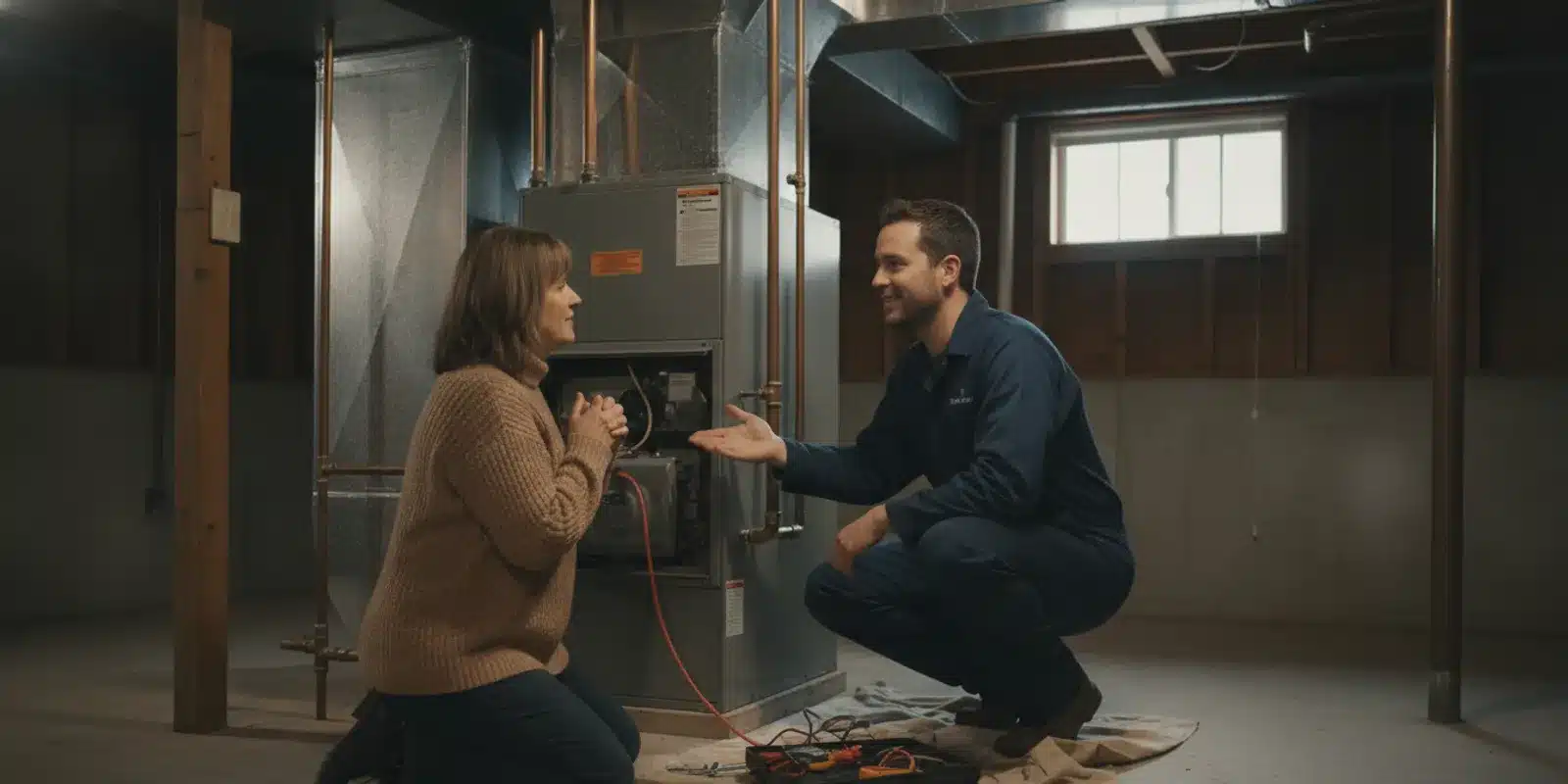
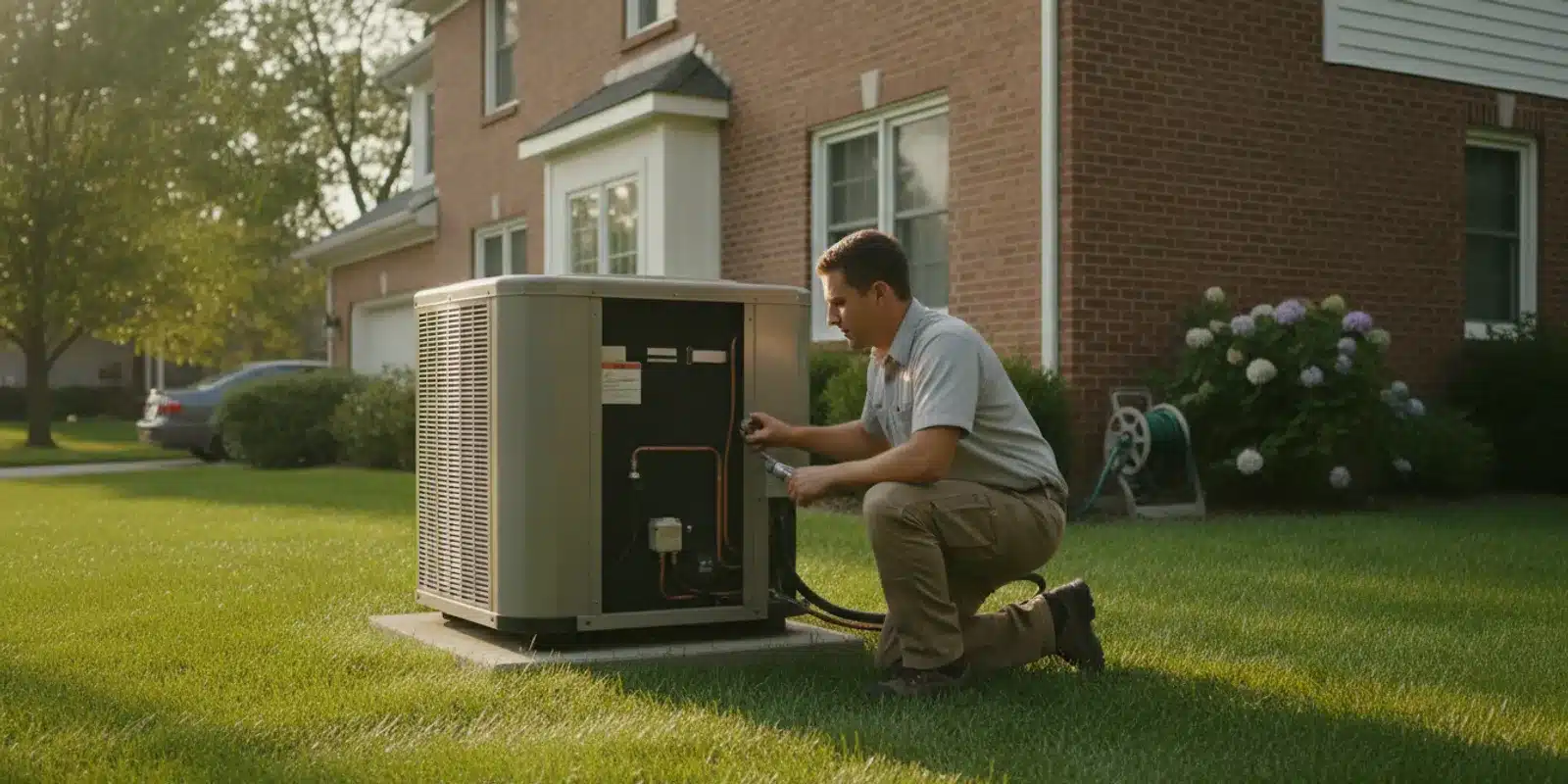
When you are asking, “should i repair or replace my air conditioner,” you deserve an answer based on your system’s condition, not a sales script. Armor Air’s No Trip Charge Ever promise means you pay nothing for an honest assessment. A technician can evaluate the equipment, explain the repair and replacement options, and help you choose the path that fits your home and budget.
If your air conditioner needs attention, Armor Air offers same-day service across Indianapolis and surrounding communities, Monday through Saturday. You will receive transparent, fixed pricing before work begins, so the recommendation does not come with surprise charges. If replacement makes more sense, you can review Armor Air’s guide to professional air conditioner replacement before making a decision.
Experience you can use, not pressure you can feel
Armor Air has served more than 3,000 homes and holds a 4.8 Google rating with 977+ reviews. CEO and founder James Robertson brings more than 30 years of HVAC experience to the company’s standards. Those details matter because a repair-versus-replacement decision depends on practical judgment, including the equipment’s age, repair history, efficiency, and expected reliability.
When a new system is the right choice, qualified homeowners may review 0% financing for 12 months through Service Finance or Hearth. The Shield Protection Plan is also available for exactly $14.99 per month. These options can make planning easier, but the recommendation should come first. Call (317) 735-8803 for same-day service and a clear assessment of your air conditioner.
Frequently Asked Questions
Is it better to repair or replace an AC unit?
Repair usually makes sense when the system is relatively young, the problem is isolated, and the estimate is comfortably below the cost of a new installation. Replacement deserves serious consideration when breakdowns are recurring, comfort is declining, energy bills are rising, or the repair would be a large share of the system’s value. A professional assessment can compare both options without pressure.
How do I know if my AC unit needs to be replaced?
Look at the unit’s age, repair history, cooling performance, and operating cost together. ENERGY STAR recommends considering replacement when an air conditioner is more than 10 years old (ENERGY STAR). Frequent failures, unusual noise, uneven temperatures, or a refrigerant leak can also shift the decision toward replacement.
Is it worth repairing a 20-year-old air conditioner?
A 20-year-old system is well beyond the typical 10-to-15-year lifespan for a properly maintained central air conditioner, according to CBS News. Repair may provide short-term cooling, but older equipment often brings more breakdown risk, lower efficiency, and limited parts availability. Request a replacement comparison before approving a major repair.
What is the $5,000 rule for AC repair?
Multiply the system’s age by the repair estimate. For example, a 10-year-old unit with a $300 repair equals $3,000, while the same unit with a $600 repair equals $6,000. This industry rule of thumb, explained by Trane, is a starting point, not a substitute for evaluating efficiency, warranty coverage, and comfort.
What should I check before choosing a new AC system?
Ask for the total installed price, equipment efficiency, expected operating costs, warranty terms, system size, and available payment options. The right replacement should be properly matched to your home rather than selected by price alone. A transparent quote should explain what is included and whether repair is still a reasonable alternative.
Ready to make the right AC decision?
A professional evaluation can help you compare repair and replacement options with clear information about your system’s condition. Armor Air will help you understand the next step without pressure.
Call Armor Air at (317) 735-8803 for same-day AC service.