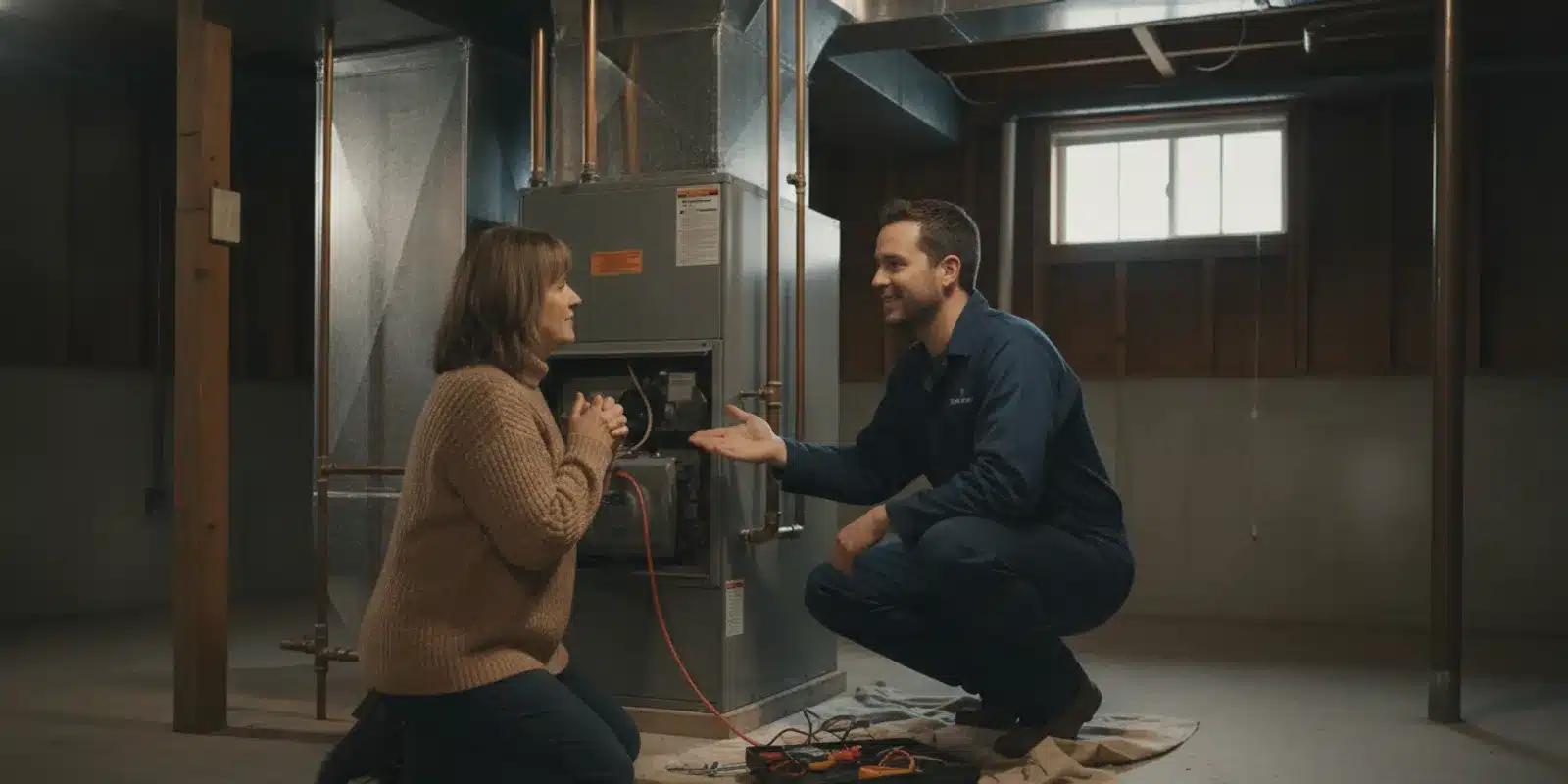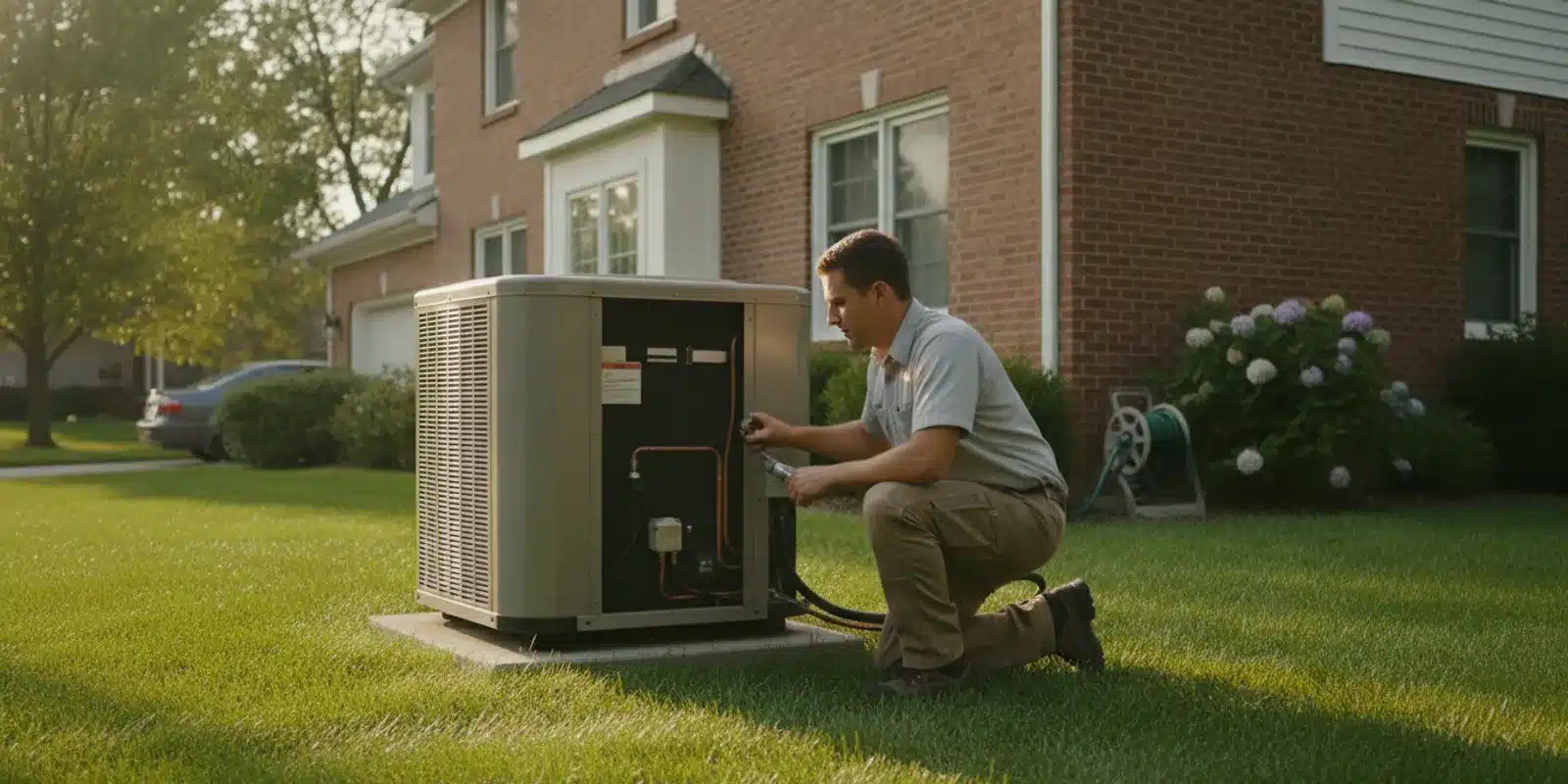
When an air conditioner stops cooling, makes an unfamiliar sound, or runs without bringing the home to a comfortable temperature, it is reasonable to ask what comes next. This guide to repair AC units explains what a professional visit can clarify, which warning signs deserve prompt attention, and how Indianapolis homeowners can prepare to describe the problem. It is about making a well-informed service decision, not taking equipment apart.
Schedule a professional AC assessment
What is the short answer when an AC needs repair?
A professional should assess an air conditioner when it no longer cools as expected, repeatedly starts and stops, leaks water, produces unusual sounds or odors, or causes a noticeable change in comfort. Those signs do not identify one certain failed part. Several different conditions can produce similar symptoms, so diagnosis matters before anyone recommends a repair or replacement.
For a service visit, the technician gathers information about the symptom, checks relevant parts of the system, and explains the findings and options. A clear assessment should connect the observed problem to the proposed work. If the cause is uncertain, ask what has been confirmed and what still needs testing. You should be able to understand the next step before authorizing work.
Armor Air provides residential heating and cooling service in Indianapolis and surrounding communities. Homeowners can review its heating and cooling services and confirm their community through the service area page.
Which AC symptoms should prompt a service call?
Some problems appear gradually, while others begin all at once. A single symptom is not a diagnosis, but the pattern can help a technician narrow down what to inspect. Request service if an issue continues, returns, or affects the home’s comfort. Contact a professional promptly if you notice a burning odor, visible water near electrical components, or a system that stops cooling during hot weather. If you believe there is an immediate safety risk, keep clear of the equipment and seek appropriate help.
| What you notice | What it may indicate | What to tell the technician |
|---|---|---|
| Air from vents feels warmer than usual | A cooling, airflow, control, or equipment issue that needs evaluation | When cooling changed and whether it happens throughout the home |
| The system starts and stops repeatedly | A control, operating, or system condition affecting normal cycles | How often it cycles and whether the pattern is new |
| Water appears around the indoor equipment | A drainage or condensation concern, among other possible causes | Where and when you see water; do not open equipment to investigate |
| New rattling, buzzing, or grinding sounds | A component may be loose, worn, or operating differently | Which area the sound comes from and whether it occurs at startup or throughout a cycle |
| Cooling varies between rooms | Air distribution, control, or equipment performance may need checking | Which rooms feel different and whether the pattern is consistent |
The table is a way to organize observations, not a substitute for diagnosis. A noise or leak can have more than one cause, and a symptom that seems minor can change over time. Describe what you see and let the technician determine which checks are appropriate.
What happens during a professional AC assessment?
The precise checks depend on the equipment and the reported issue. A good visit begins with questions, not assumptions. A technician may ask when the issue started, whether it is constant or intermittent, and whether anything changed in the home’s comfort or system operation. That context helps focus the inspection.
The technician can then evaluate relevant controls and equipment, examine the system’s operation, and perform tests suited to the symptom. The goal is to identify a likely cause and determine what work, if any, is appropriate. The U.S. Bureau of Labor Statistics groups installation, maintenance, and repair work in its occupational overview of installation, maintenance, and repair occupations; for a homeowner, the practical point is to ask for a clear explanation of the assessment and its limits.
Before agreeing to a repair, ask the technician to explain:
- What condition was found, in plain language?
- Which observations or tests support that conclusion?
- What work is being recommended, and what should it change?
- Are there reasonable alternatives, or is another check needed first?
- What is included in the quoted scope, and are any additional parts or work excluded?
- What should you expect after the work is completed, and what would call for a follow-up?
These questions are useful whether the problem appears simple or complex. A recommendation should be specific to the home’s system and the issue found, rather than based only on a general rule about equipment age or a single symptom. A written scope can help you compare options and understand exactly what you are approving.
It is also fair to ask what the technician was able to verify during the visit. Some problems are present throughout the appointment; others occur only under particular conditions. If the symptom is intermittent, share its timing and ask whether the system needs to be observed in a certain operating mode. A careful answer may distinguish a confirmed fault from a possibility that needs additional evaluation.
Before work begins, confirm the expected sequence: what will be addressed first, whether the technician expects to run the system afterward, and how the result will be explained. If a new issue appears during the work, ask for an updated explanation and scope before approving additional work. That keeps the conversation clear and gives you a chance to decide based on new information rather than feeling surprised.
How do you tell whether repair is a reasonable option?
There is no single answer that fits every air conditioner. The decision depends on the confirmed condition, the equipment’s overall performance, the availability of appropriate parts, and the homeowner’s priorities. Start with the diagnosis. A clear explanation should distinguish an isolated repair from evidence of broader system trouble.
When a repair is proposed, ask what it addresses and whether it is expected to restore normal operation. If the technician identifies other concerns, ask which ones require attention now and which can be monitored. If replacement is raised, ask what specific findings support that recommendation and whether a repair option remains. The point is not to favor repair in every case; it is to understand the basis for each option before making a major decision.
Scope and clarity matter. Two recommendations are not directly comparable if one includes testing or related work and the other does not. Ask for the recommended work and any limits in writing. Armor Air’s approach is guided by its customer-first service philosophy; homeowners should expect a straightforward conversation about the system’s condition and next steps.
If you are weighing more than one proposal, compare the diagnosed condition, the specific work, the parts or related tasks included, and any stated limitations. A shorter description may leave important questions unanswered, so ask each provider to clarify the same points. The lowest initial figure is not meaningful on its own if the scopes differ. Likewise, a broad recommendation should still explain what applies to your system and why.
There is no need to make a decision based on pressure or a generalized claim that every home needs the same solution. If you need time to review a non-urgent proposal, say so and ask how long the recommendation remains valid, especially if parts availability or system operation could affect timing. If comfort or a safety concern is worsening, mention that clearly so the provider can explain the urgency.
How can you prepare for the appointment?
You do not need to diagnose the equipment before calling. A few ordinary observations can make the visit more focused without requiring you to open or adjust the system. Before scheduling, make a note of:
- The main symptom, such as weak cooling, a new sound, or water near the equipment.
- When it began and whether it is continuous or comes and goes.
- Which rooms are affected and whether the issue changes at different times of day.
- Any recent change you noticed, such as a new sound or a different operating pattern.
- How to access the indoor and outdoor equipment safely, and whether pets or gates affect access.
Share what you have observed when you book. You can also mention whether you have used the system’s controls as usual or whether the thermostat display shows an alert. Do not remove panels, handle wiring, or attempt to reach moving parts. If you are unsure whether something is safe to approach, leave it alone and tell the service team.
For an appointment, make sure an adult can explain the issue and answer questions about when it occurs. If you have past service paperwork or equipment information readily available, it may help provide context, but do not delay a call to search for documents. The technician can advise what details are useful after hearing the symptoms.
When should Indianapolis homeowners request same-day help?
Ask about same-day availability when the air conditioner has stopped cooling, the indoor temperature is becoming uncomfortable, or a leak or unusual sound is worsening. Availability can depend on the day, service demand, location, and the nature of the issue, so confirm the appointment timing directly. Armor Air serves residential customers across Indianapolis-area communities; its air conditioning service page explains the relevant service, and the contact page provides a direct route to request help.
Armor Air states that it offers same-day service at standard rates and has a no-trip-charge policy. Ask the team to explain what applies to your request and confirm the service scope before work begins. The company closes Sundays, so do not assume a Sunday appointment is available. If an issue starts outside normal availability, describe the situation when you contact the company and ask about the next available option.
For homeowners who want to understand how routine care differs from repair, Armor Air also outlines its AC maintenance service. Maintenance and repair are not interchangeable: maintenance is planned care, while repair responds to a system concern that needs diagnosis.
How can you choose a service provider with confidence?
Look for a provider willing to explain the findings, describe the work before it begins, and answer questions without rushing you into a decision. A useful conversation is specific to your home and system. Be cautious of a recommendation that skips over the observed problem or cannot explain why the proposed work is needed.
Before you book, confirm that the provider serves your address, ask how scheduling works, and clarify whether there are charges or conditions you should know about. Read the proposed work carefully. If you want to learn about other homeowners’ experiences, Armor Air shares customer reviews. A review can offer perspective, but the technician’s explanation and the written scope should guide your decision about your own equipment.
For Indianapolis homeowners, choosing a local residential service provider also means checking that the company covers your neighborhood and can explain the timing for your visit. In nearby communities such as Greenwood, Avon, Plainfield, Brownsburg, Franklin, and Zionsville, service availability may differ by schedule. Confirm it when you call rather than relying on a general service-area list alone.
Contact Armor Air to discuss your AC symptoms
Frequently asked questions
Can a technician diagnose an AC problem from the symptom alone?
No. A symptom can point to several possible causes. A technician needs to assess the system and use checks appropriate to the reported issue before recommending work.
Should I keep running an air conditioner that is making a new sound?
If the sound is new, persistent, or getting worse, contact a professional and describe it. If you notice a burning odor, visible damage, or another safety concern, stop using the equipment if you can do so safely and seek prompt professional guidance.
What information should I give when I request AC service?
Explain what changed, when it started, whether it happens continuously, and which rooms are affected. Mention any unusual sound, odor, or visible water. You do not need to identify the cause yourself.
Does every AC repair require replacing the whole system?
No. Some problems may be addressed with a repair, while other findings may lead a technician to discuss broader options. The recommendation should be tied to the condition found, and you can ask what supports each option.
Can I get same-day AC service in the Indianapolis area?
Armor Air offers same-day service, but timing depends on availability, location, and the request. Contact the company to confirm the next appointment option for your address. Armor Air is closed Sundays.
Does Armor Air charge a trip fee?
Armor Air states that it has a no-trip-charge policy. Confirm the terms for your specific request and ask for the work scope and any applicable charges to be explained before service begins.
A clear diagnosis, a written explanation, and a chance to ask questions can help you decide what to do next. If your AC is not cooling properly, share the symptoms with a local professional and confirm a service time that works for your household.