


Why Replacing Water Softener Matters for Your Home
Replacing water softener systems is something most homeowners will need to do at least once — and knowing when and how to do it can save you hundreds of dollars and a lot of headaches.
Here’s a quick overview of what you need to know:
- When to replace: Most water softeners last around 10 to 15 years. It may be time for a replacement if hard water problems come back, the unit starts leaking or rusting, or performance keeps dropping.
- Cost factors: Replacement cost depends on the system type, size, features, and how much installation work your plumbing setup requires.
- Right size: A household of 1 to 4 people often does well with a 30,000-grain system. Homes with 5 to 6 people may need closer to 40,000 grains.
- DIY or pro? If the plumbing connections are simple and already in place, replacement can be manageable for an experienced DIYer. More complicated setups are usually best handled by a licensed plumber.
- Types available: Salt-based ion exchange, salt-free conditioners, dual-tank systems, and magnetic softeners each fit different homes, water habits, and hardness levels.
Hard water does more than leave spots on your dishes. It can dry out your skin, clog pipes, shorten the life of appliances, and raise energy bills as mineral buildup makes your water heater work harder. For many Indianapolis homeowners, these issues build up little by little until soap stops lathering well, faucets get crusty, and the water no longer feels right.
With years of hands-on experience in home water systems and plumbing services across Indianapolis, the Armor Air team has helped many homeowners navigate the process of replacing water softener units, from choosing the right system to getting it installed correctly the first time.
Recognizing the Signs for Replacing Water Softener
Knowing when to say goodbye to your old unit is the first step in maintaining a healthy home. As we move through April 2026, many systems installed in the early 2010s are reaching the end of their functional lives. While these units are the “unsung heroes” of our plumbing, they aren’t invincible.
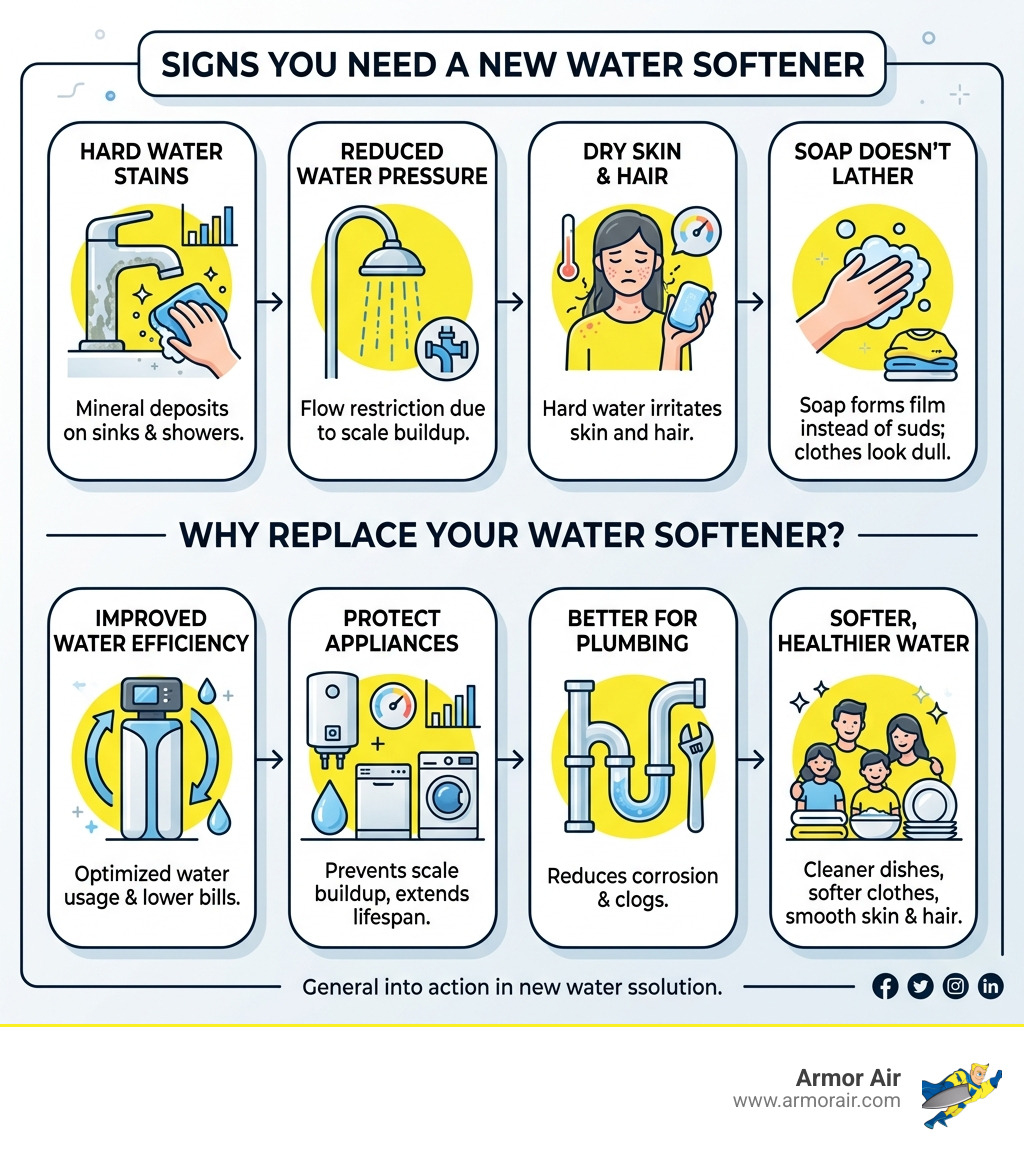
The typical lifespan of a water softener is 10 to 15 years. If your system is getting up there in age, replacement may make more sense than another repair. Age is one clue, but performance matters too. Watch for leaks, rust, reduced softening, or resin beads in the water, which can point to internal failure. In some cases, a water softener repair can buy you more time, but many older units are better replaced than patched.
Identifying Hard Water Symptoms
If you aren’t staring at the tank every day, your house will tell you when the system is failing. Are you noticing white, chalky spots on your glassware even after a heavy wash cycle? That’s limescale. You might also notice that your skin feels perpetually dry or itchy after a shower, or your laundry feels stiff and scratchy rather than soft.
When minerals like calcium and magnesium are no longer being filtered out, soap has a much harder time lathering. If you suddenly need more shampoo, body wash, or detergent to get the same results, your water softener may not be working well anymore. Reviewing the top benefits of installing a water softener in your home can help show how much hard water affects everyday comfort.
Evaluating System Efficiency in 2026
Modern systems in 2026 are much more efficient than their predecessors. If you find yourself hauling heavy salt bags to the basement every other week, your system is likely over-working. Frequent regeneration cycles are a classic sign that the resin bed is exhausted.
You can learn more about when and how to change water softener resin to decide whether a resin replacement might extend the life of your unit. But if the control valve is failing too, replacing water softener parts or the full system is often the better move. Low water pressure across your home can also point to a blocked resin tank or another internal issue. In Central Indiana, seasonal temperature swings can affect performance, so it helps to review water softener maintenance for winter protection before cold weather sets in.
Choosing the Right System: Capacity and Types
Selecting a new system isn’t a “one-size-fits-all” situation. You need to balance your household’s water usage with the hardness levels of the Indianapolis municipal supply (which can be quite high, often exceeding 15–20 grains per gallon in some areas).
Determining Grain Capacity for Your Home
The “Grain Capacity” refers to how much hardness the system can remove before it needs to regenerate. To get this right, we use a simple formula: multiply the number of people in your home by 75 gallons (average daily use), then multiply that by your water hardness in grains per gallon (gpg).
As a rule of thumb:
- 1-4 People: 30,000 grain capacity.
- 5-6 People: 40,000 grain capacity.
- Large Households/High Hardness: 64,000 to 80,000 grains.
Choosing a system that’s too small can cause early wear and let hard water slip through. If you’re not sure what your home needs, our water softener services include professional testing to help you choose the right fit.
Selecting the Best Type for Replacing Water Softener
While salt-based ion exchange remains the gold standard for truly soft water, you have options. Salt-free conditioners are excellent for those on sodium-restricted diets, as they crystallize minerals to prevent them from sticking to pipes without adding salt. Dual-tank systems are the “luxury” choice; while one tank is cleaning itself (regenerating), the other provides soft water, so you never have to shower in hard water at 2:00 AM.
Do not overlook filtration. Many newer water softeners come with a built-in sediment filter. If yours does not, it may help to review changing water softener filters or add a pre-filter to help protect the resin from sediment and chlorine. If you want a simple overview of the process, see how do water softeners work?
Step-by-Step Guide to Replacing Water Softener Systems
If you are replacing water softener equipment where a unit is already installed, the job is often simpler. The main plumbing connections, drain line, and nearby power outlet are usually already in place. That can make replacement a manageable DIY project for a handy homeowner.
Disconnecting the Old Unit
Before you start, make sure you have your tools ready: a pipe cutter, adjustable wrenches, plumber’s tape, and buckets to catch the “surprise” water left in the lines.
- Shut off the water: Turn off the main water supply to the house.
- Bypass the system: Turn the bypass valve to the “off” or “bypass” position to isolate the unit.
- Release pressure: Open a nearby faucet to let the pressure out of the lines.
- Disconnect power: Unplug the unit.
- Drain the tank: Use a bucket or a wet-dry vac to remove as much water as possible from the brine tank. Warning: a full softener can weigh over 100 pounds!
- Uncouple the pipes: Use your wrench to disconnect the inlet and outlet hoses. If your system uses C-clips, pry them off gently with a screwdriver.
Installing and Calibrating the New System
Once the old unit is out, clean the area. Position your new softener on a level surface near the floor drain and power outlet.
- Connect the lines: Use SharkBite fittings or flexible connectors for the easiest “push-to-connect” experience. Ensure the “In” pipe goes to the “In” port — swapping them is a common mistake that leads to hard water!
- Attach the drain line: Secure the drain hose to the softener and run it to the floor drain or standpipe, ensuring there is an “air gap” to prevent backflow.
- Brine connection: Connect the brine tank to the mineral tank.
- Check for leaks: Slowly turn the water back on and check every joint.
- Program the head: Enter your water hardness level and the current time into the digital controller.
- Initial Regeneration: Add salt and run a manual regeneration cycle to flush out any air and “charge” the resin.
Cost and Professional vs. DIY Considerations
Budgeting for replacing water softener systems involves more than just the price tag on the box. You have to consider the “total cost of ownership,” including salt, electricity, and potential labor.
Budgeting for Your Replacement
The cost of the unit itself can vary a lot based on the system type:
- Budget or magnetic systems: Usually the lowest upfront cost, but performance can be limited
- Standard single-tank systems: A common choice for many homes balancing cost and capacity
- High-end or dual-tank systems: Better for larger households or homes with higher water demand
- Whole-home reverse osmosis systems: Typically the biggest investment due to added filtration and system complexity
When to Call a Professional for Replacing Water Softener
While we love a good DIY project, there are times when calling Armor Air is the safer bet. If your home doesn’t have a bypass valve, if you need to move the unit to a new location, or if you’re dealing with old, brittle galvanized pipes, a professional touch prevents expensive water damage.
Professional installation can help make sure your new system meets local Indianapolis building codes and supports your manufacturer’s warranty. We focus on clear, helpful guidance, so you get the information you need and choose what works best for your home.
Frequently Asked Questions about Replacing Water Softener
How long does a water softener typically last?
Most water softeners last 10 to 15 years. That said, water with high chlorine or iron can wear down the resin beads sooner. In some cases, replacing the resin can extend the system’s life. Even then, valves and other moving parts will eventually wear out.
Can I replace a water softener myself in one hour?
Yes! If you are doing a “like-for-like” replacement (swapping an old unit for a new one of the same brand or with similar connections), the plumbing is already there. Using flexible hoses and SharkBite fittings can make the actual connection process take less than 60 minutes.
Does a home warranty cover the replacement?
Many home warranties do cover water softeners, but there’s a catch. They often cover “wear and tear” repairs rather than full upgrades. Always check your specific policy for service fee amounts and coverage limits before you start replacing water softener units on your own.
Conclusion
At Armor Air, we believe that every Indianapolis home deserves clean, soft water that protects your plumbing and your family’s comfort. Whether you’re a DIY enthusiast looking to tackle a replacement this weekend or you’d prefer the peace of mind that comes with a professional installation, we’re here to help.
We serve the entire Indianapolis metropolitan area with a customer-first approach and a strong commitment to giving back. Our technicians are experienced, helpful, and never push products you do not need. Ready to upgrade? Visit our water softener installation services page or contact our water softener specialists today.


